Lontano dal Mare
Curated by Milovan Farronato
Patricia Low Contemporary, Gstaad is delighted to present Lontano dal Mare, a two-person exhibition with works by Iva Lulashi and Thomas Braida; both painters are shown for the first time at the gallery.
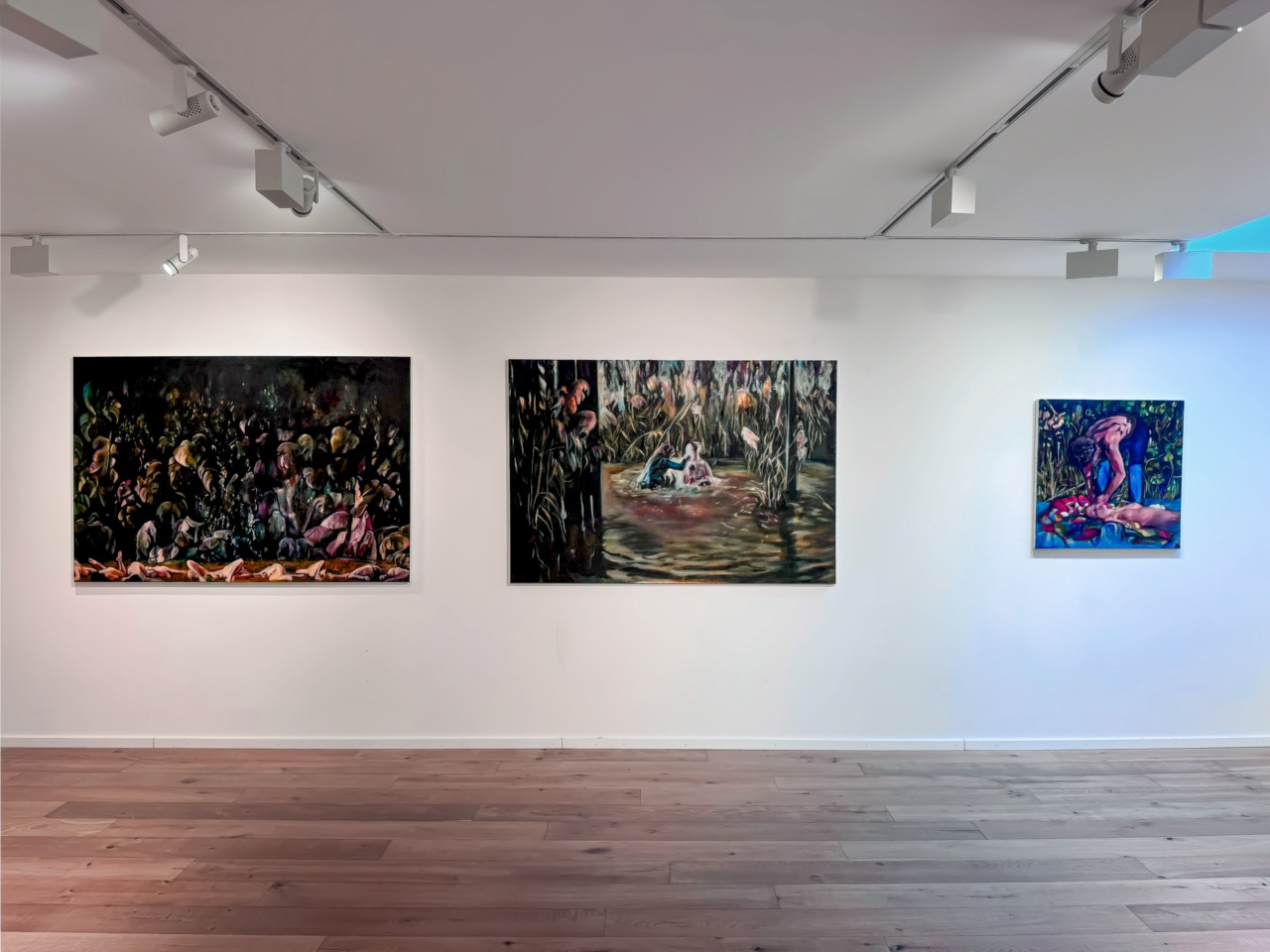
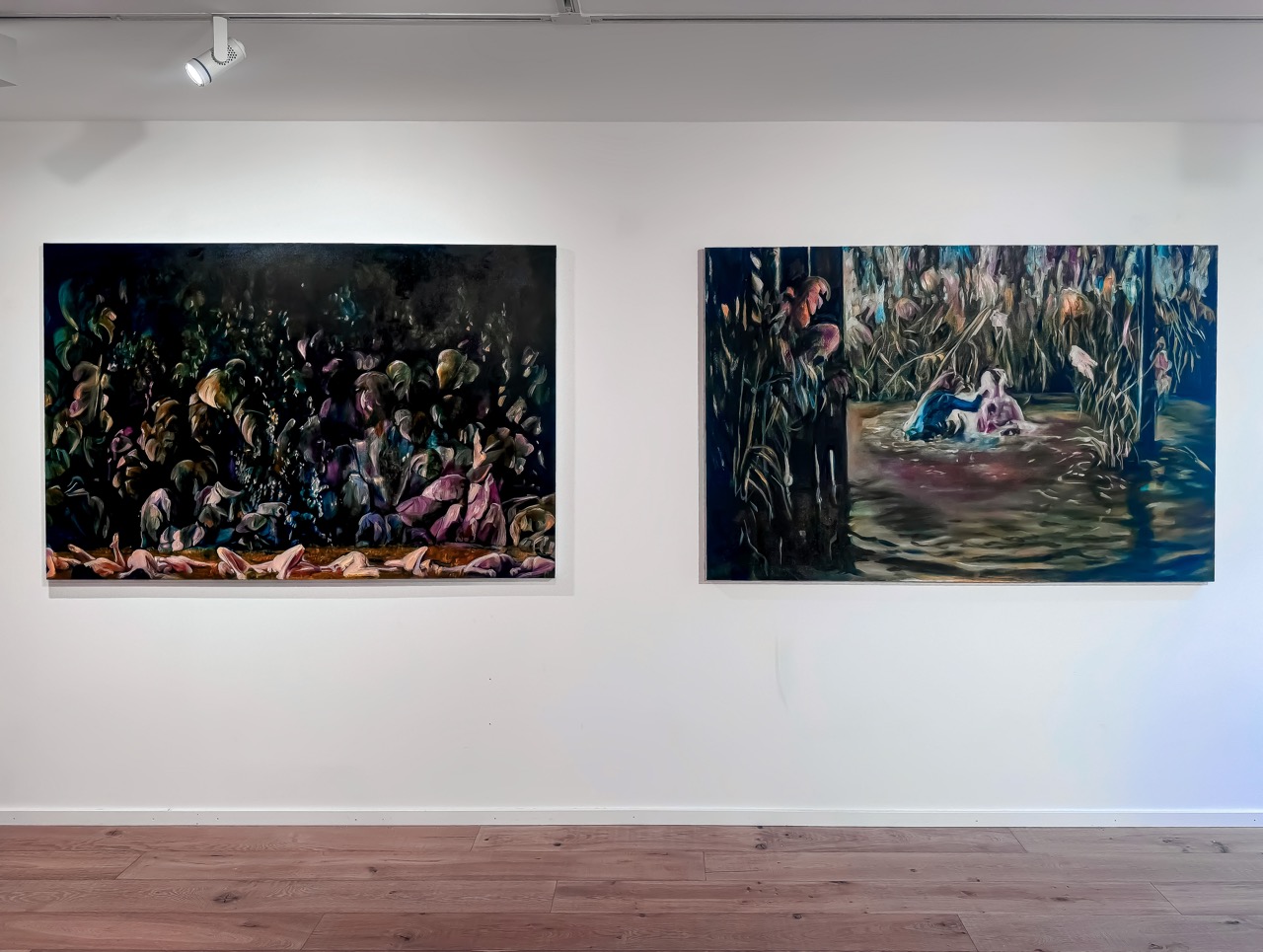
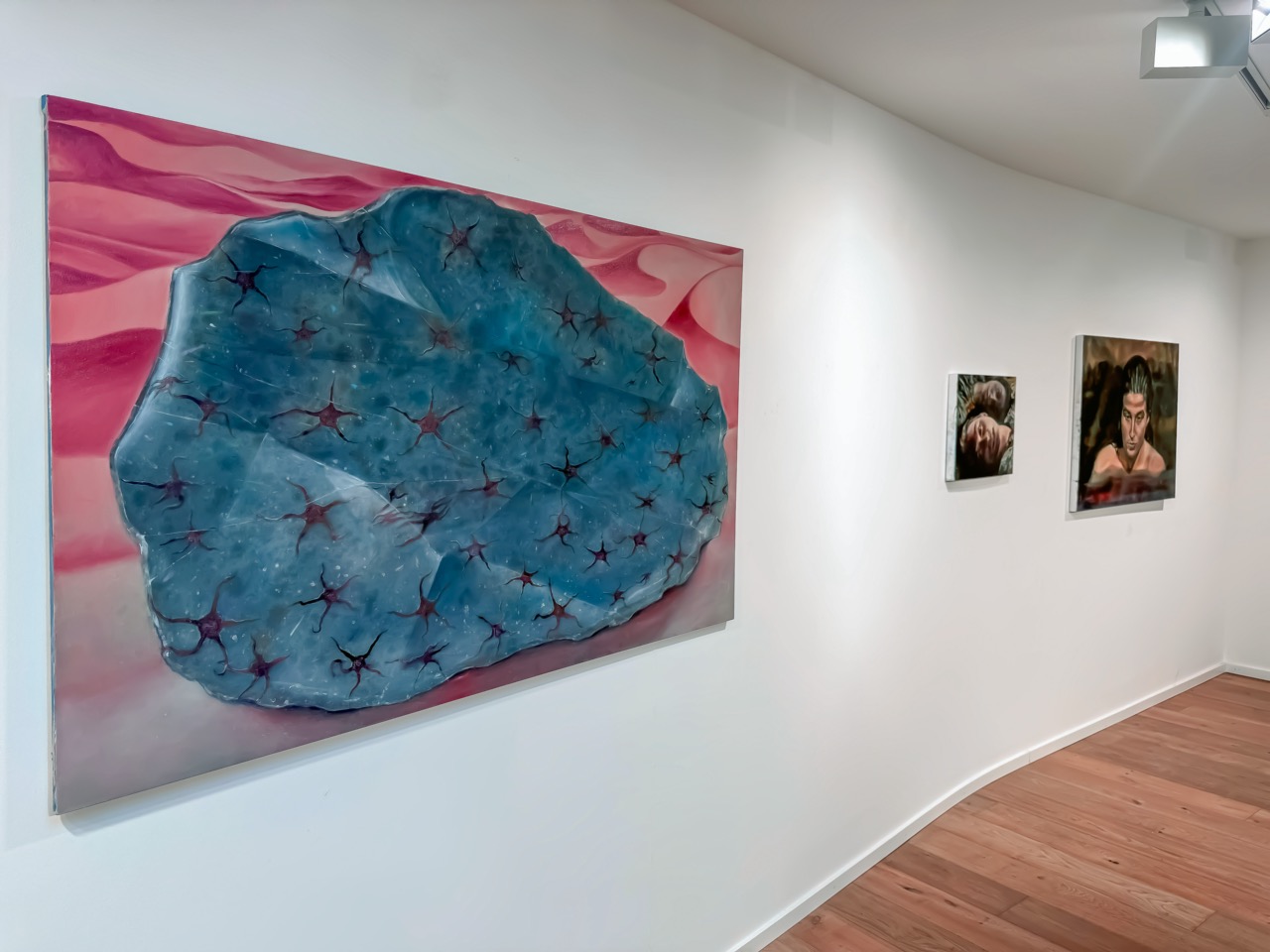
The exhibition Lontano dal Mare unfolds like a Surrealist exquisite corpse: not a simple dialogue between two painters, Iva Lulashi and Thomas Braida, but a device of unforeseen continuities, of lines flowing from one image into the next without either artist truly knowing where the other will lead them. As in the celebrated Surrealist games—wherae each hand, drawing blindly after the previous one, carried the image onto another plane, adding a new meaning, at times inexplicable, instinctive, even spiritual—so Iva Lulashi and Thomas Braida build the exhibition as a chain of intuitions that call to one another, contradict one another, mirror one another.
Their paintings never share the same physical space, never overlap: what matters is not the direct intervention on each other’s work, but the response that unfolds, refracts, and sparks from one canvas to another, in an instinctive and affective way. Between the Albanian-born, Italy-based paintress and the Friulian painter, who first met during their years at the Venice Academy, a long-shared horizon takes shape, where each work opens onto the next, like a piece of combinatory literature.
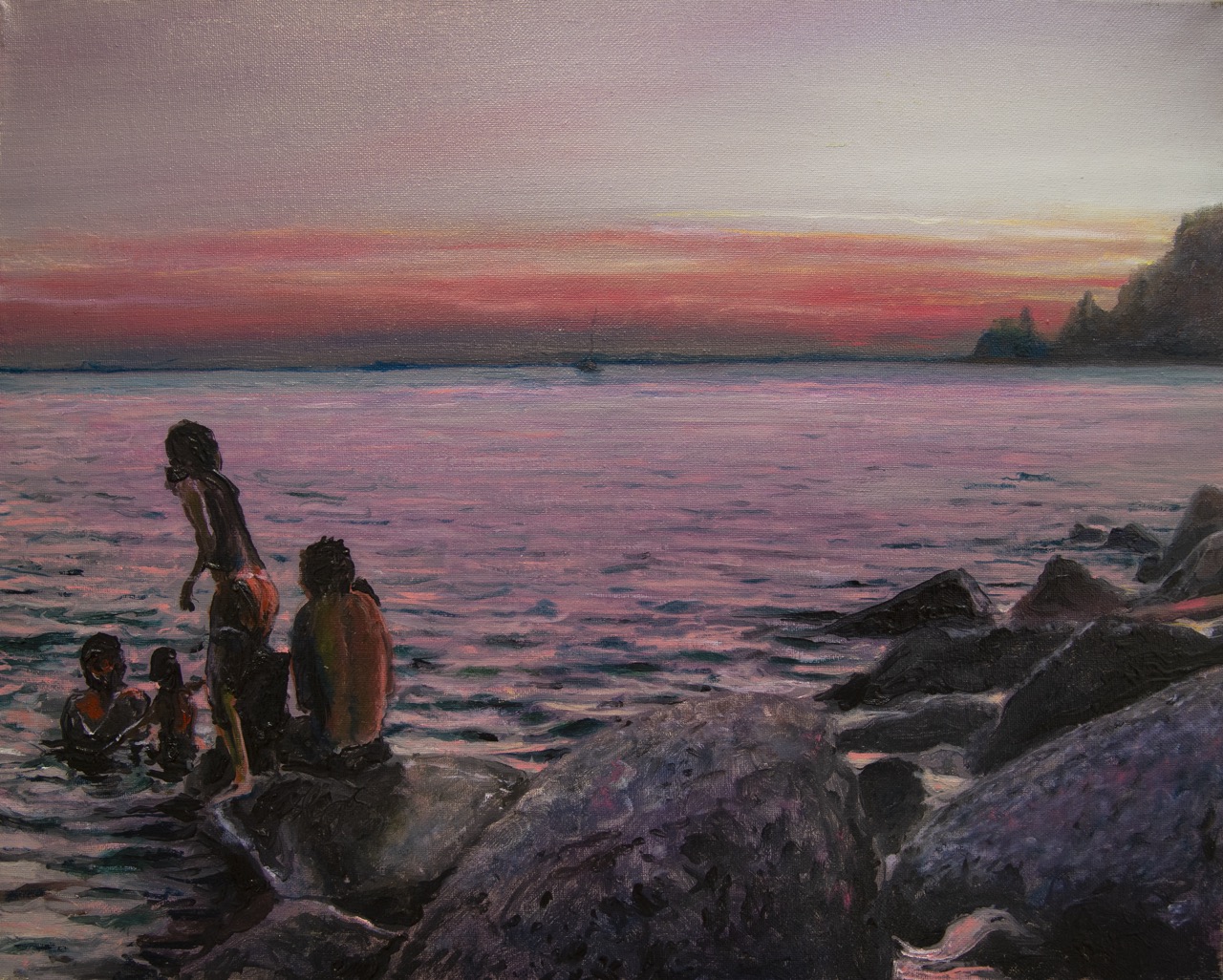
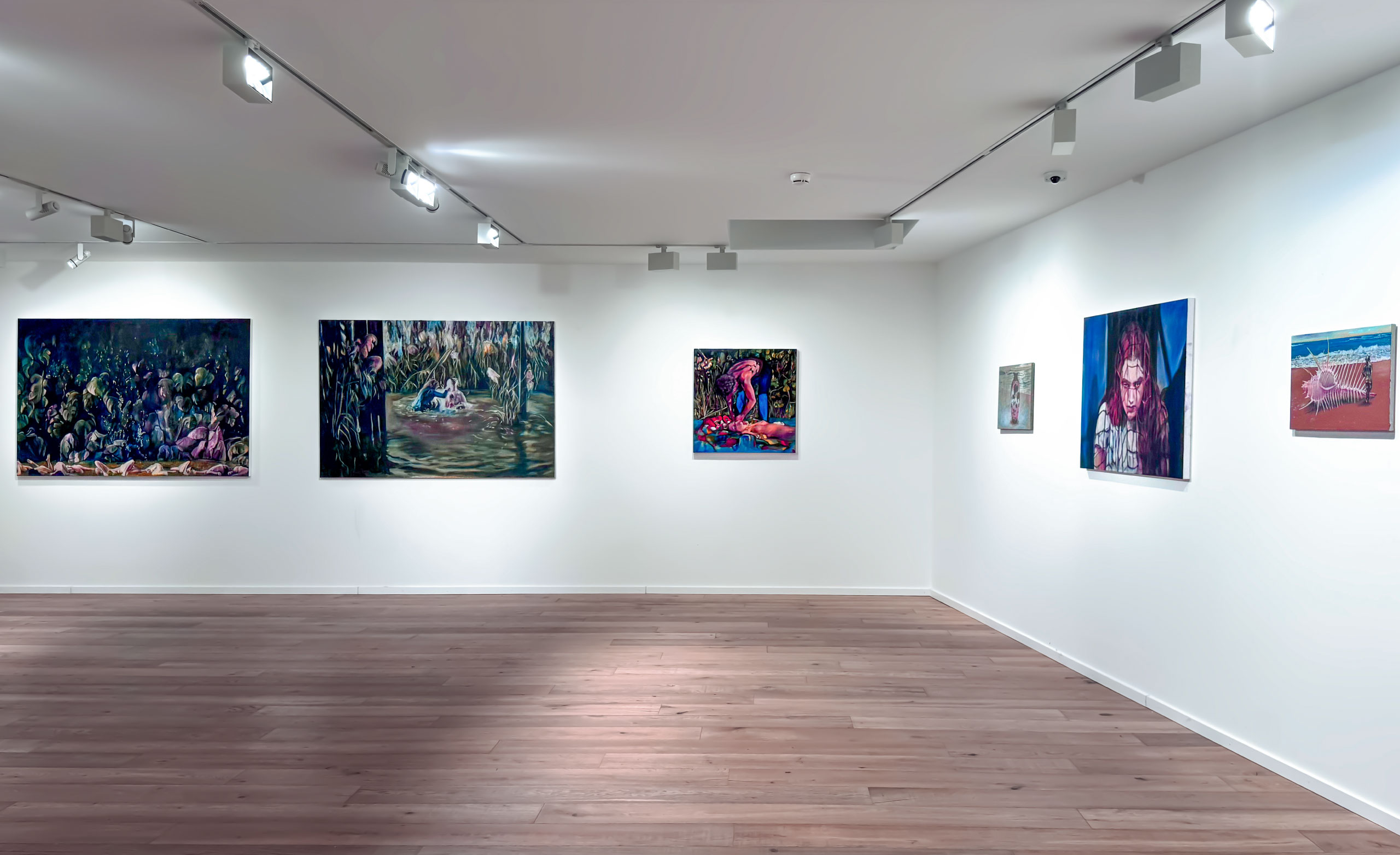
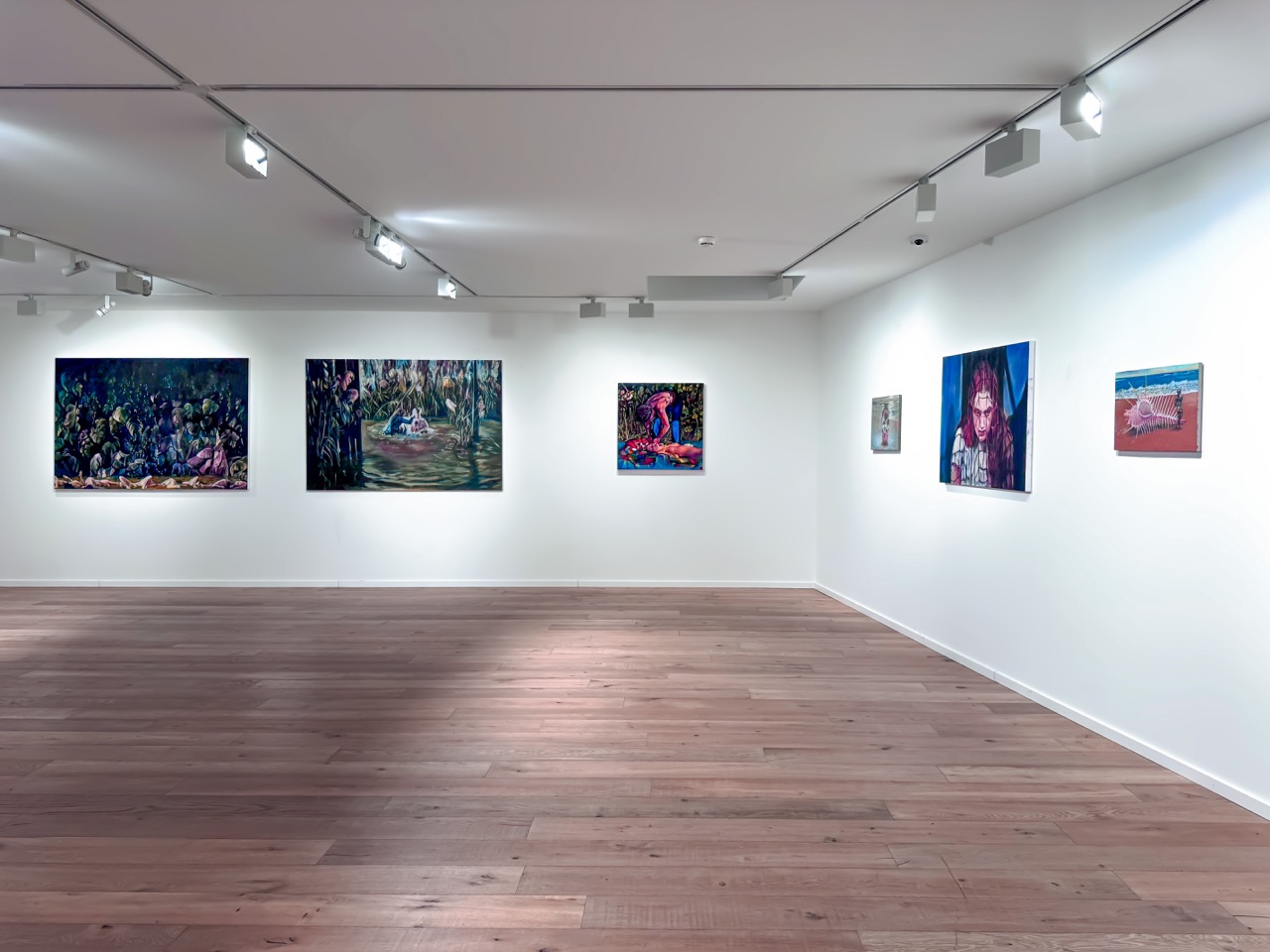
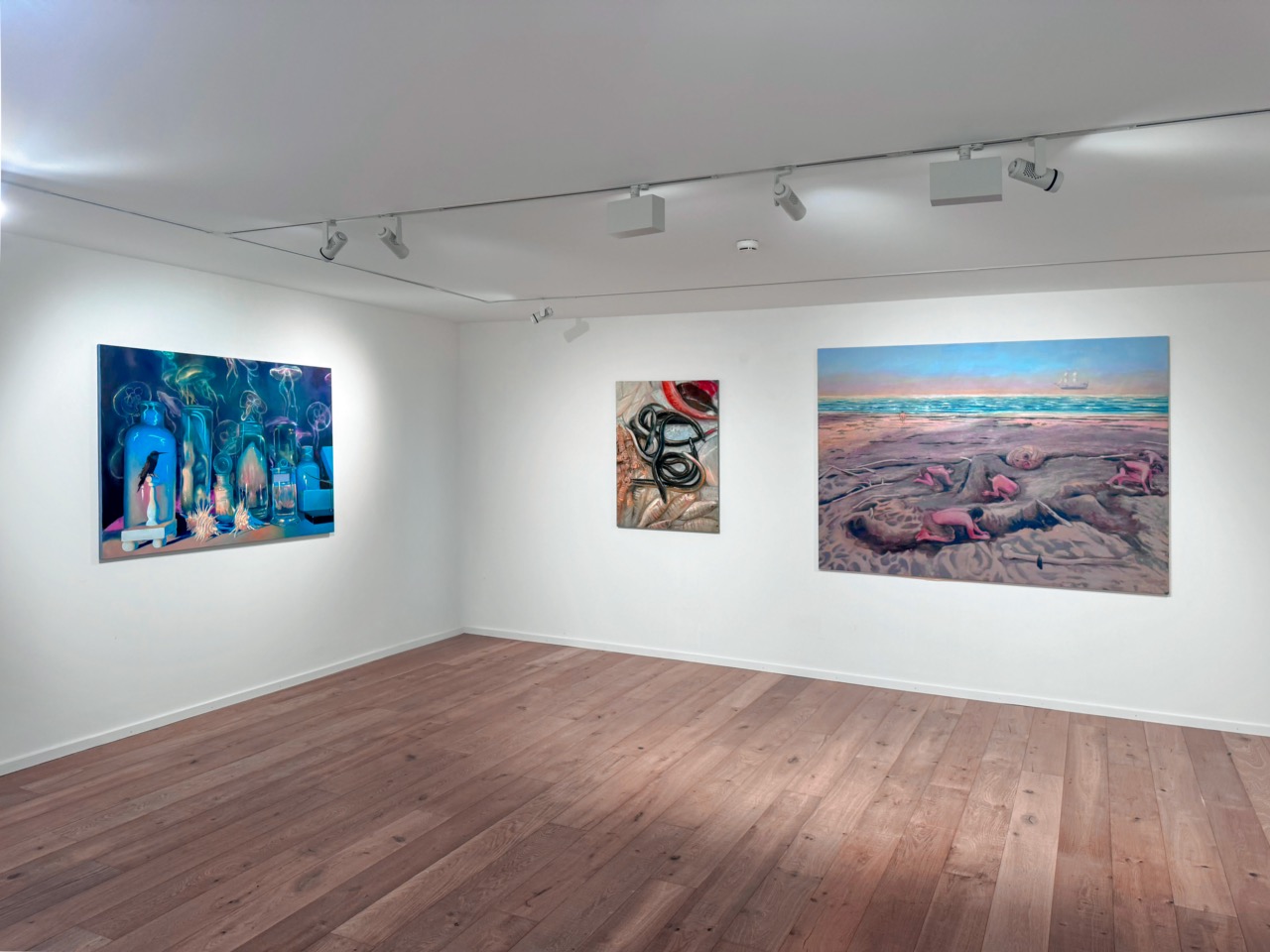
Lontano dal Mare is both a horizon and a perspective. Seas crossed by symbolic presences, creatures, and landscapes suspended between myth and contemporary reality. Paintings like fossils of an uncertain time, floating or sinking, between distant horizons and sudden flashes of light. An ideal dialogue between the ancient and the new. Lontano dal Mare is a painting exhibition born out of a distance: the distance from a place, a time, a memory that persists like an intermittent reflection. “Far” is what one no longer possesses yet still exerts a magnetic pull, like a horizon that never stops calling. In this sense, the exhibition is nostalgic: it is a threshold. A space where looking from afar also means imagining, remembering, holding one’s breath as if in apnea beneath a waterline that, though it does not exist, continues to exert its pull.
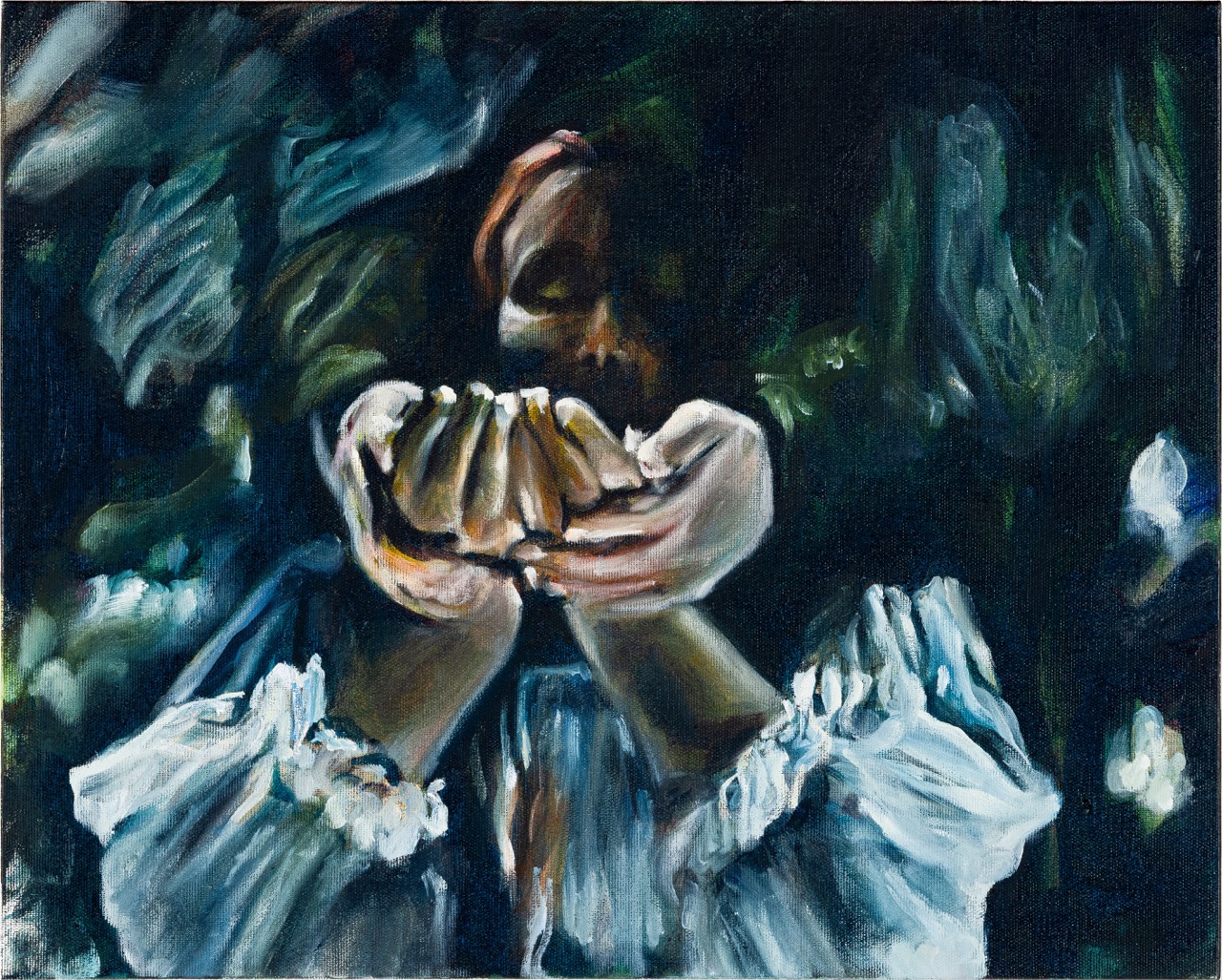
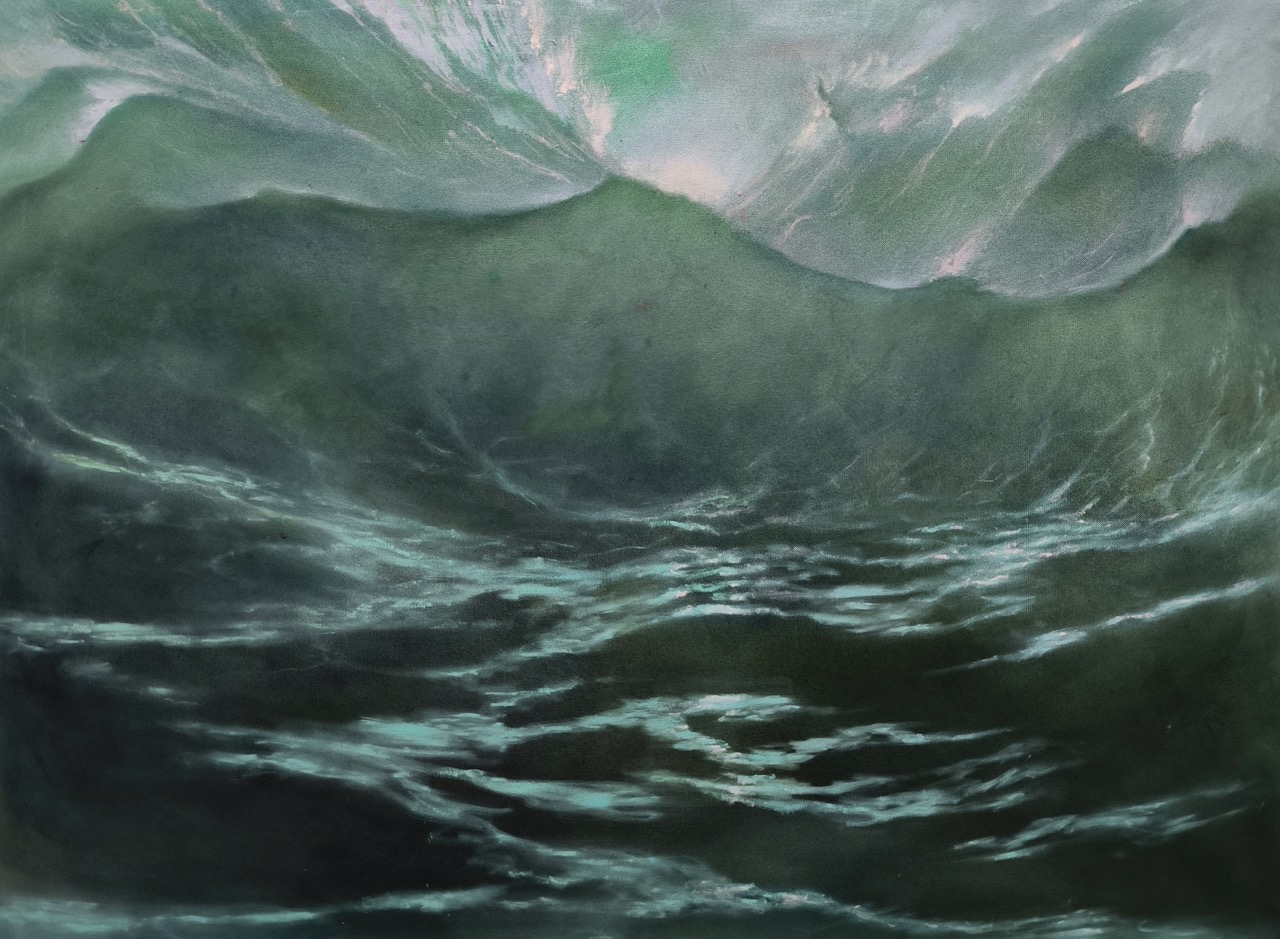
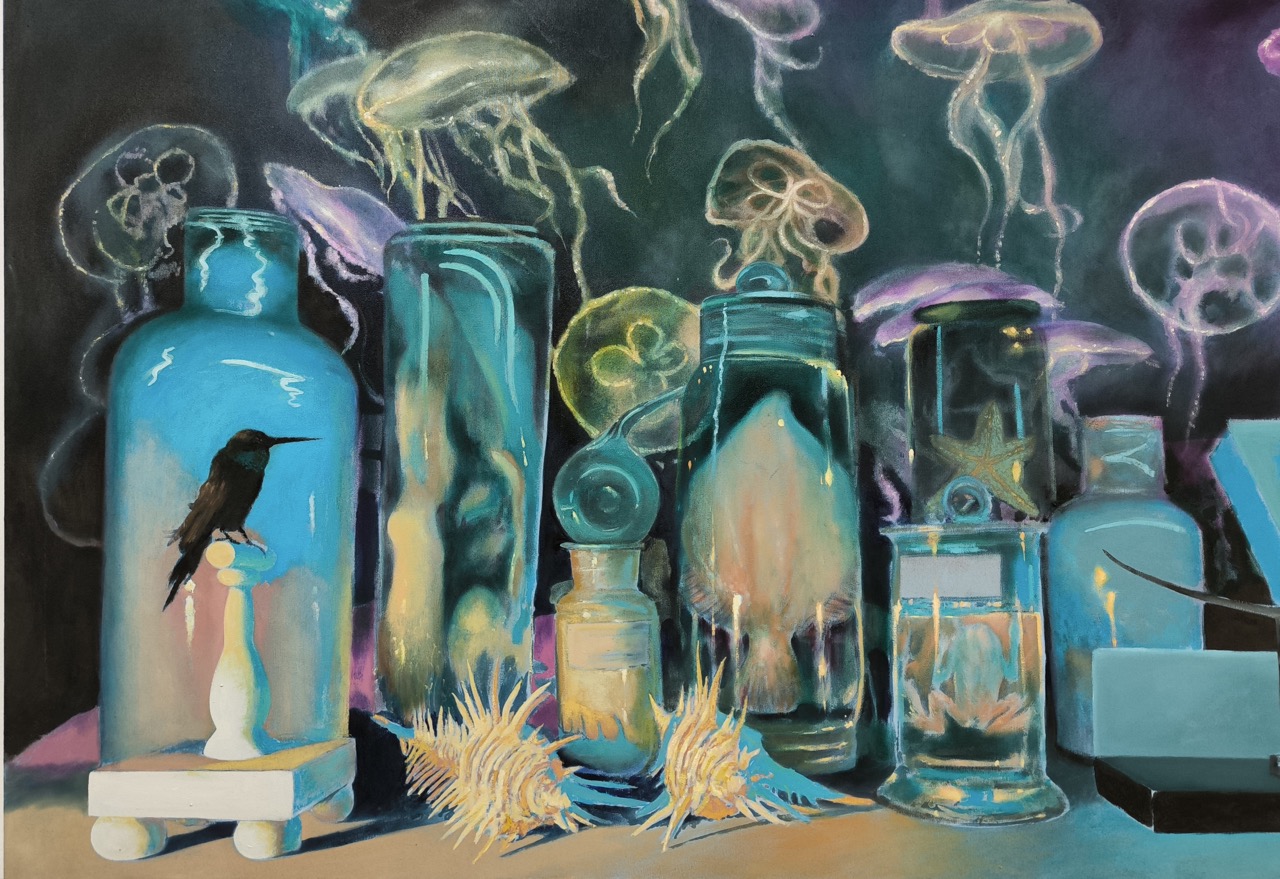
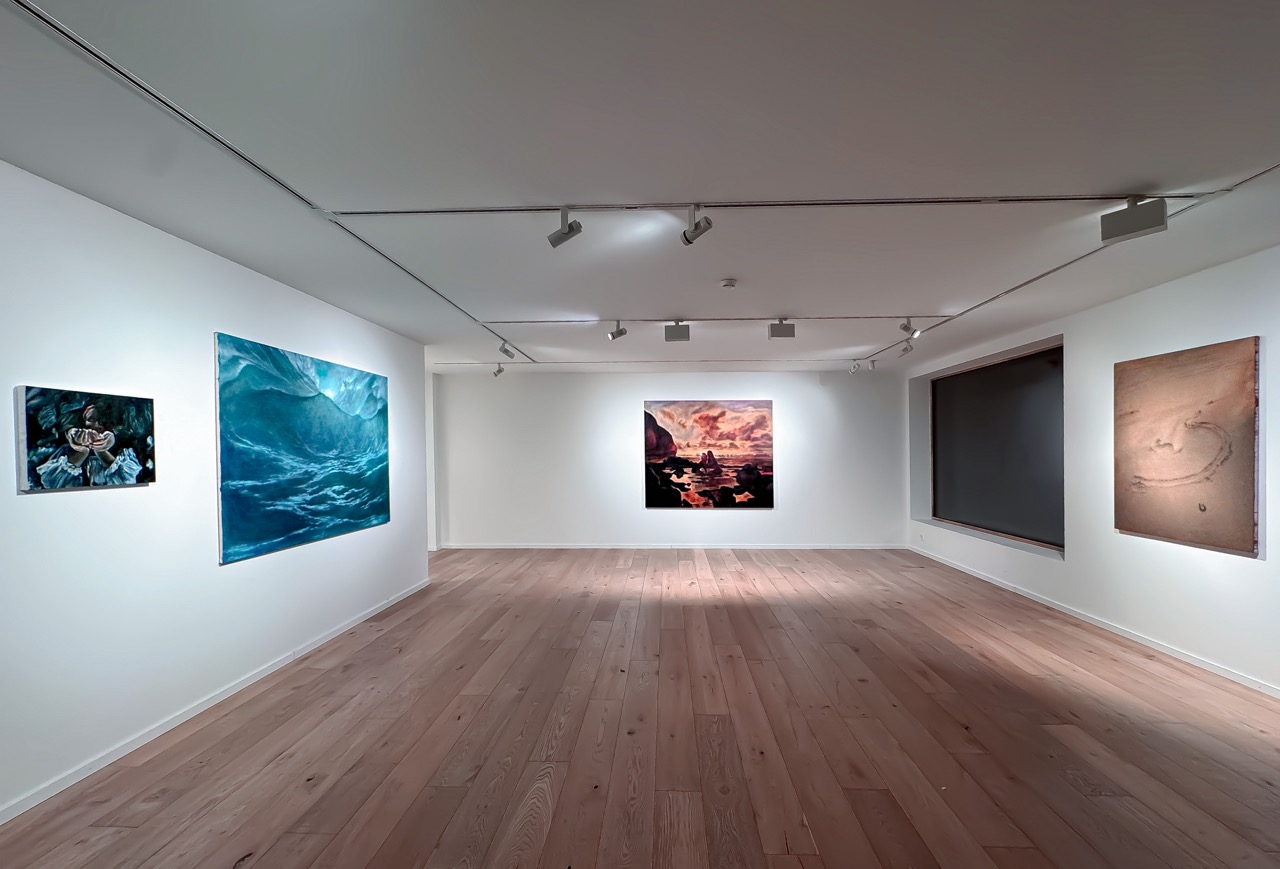
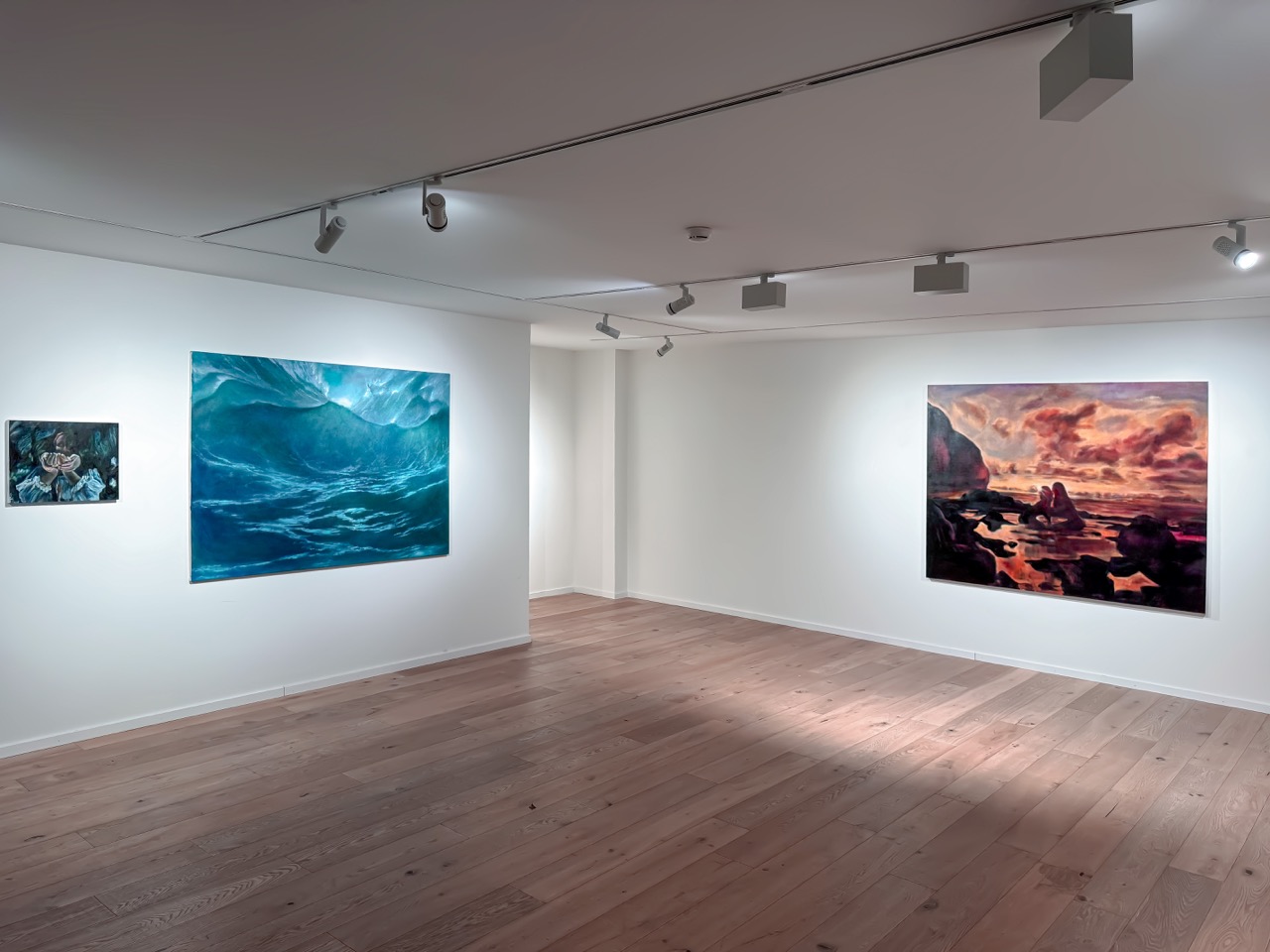
The imagery of Thomas Braida inhabits this boundary between surface and depth, emergence and disappearance. His seascapes are suspended, almost abandoned scenes: small things left on the sand. A shell beside a figurine, a vase with a floral déco pattern, scattered remnants like clues to a story that never fully reveals itself. In a nearly monochrome painting, a word—or perhaps only a symbol—appears inscribed in the sand: an erased memory, a broken seal, the echo of a voice the tide is about to swallow. And then, suddenly, the great wave: a wall of water that could submerge everything, draw every image back into apnea, rewrite the scene from the beginning. In Braida’s paintings, the horizon is only seemingly a peaceful place: it is an unstable line, an oscillation, a possibility of disappearance.
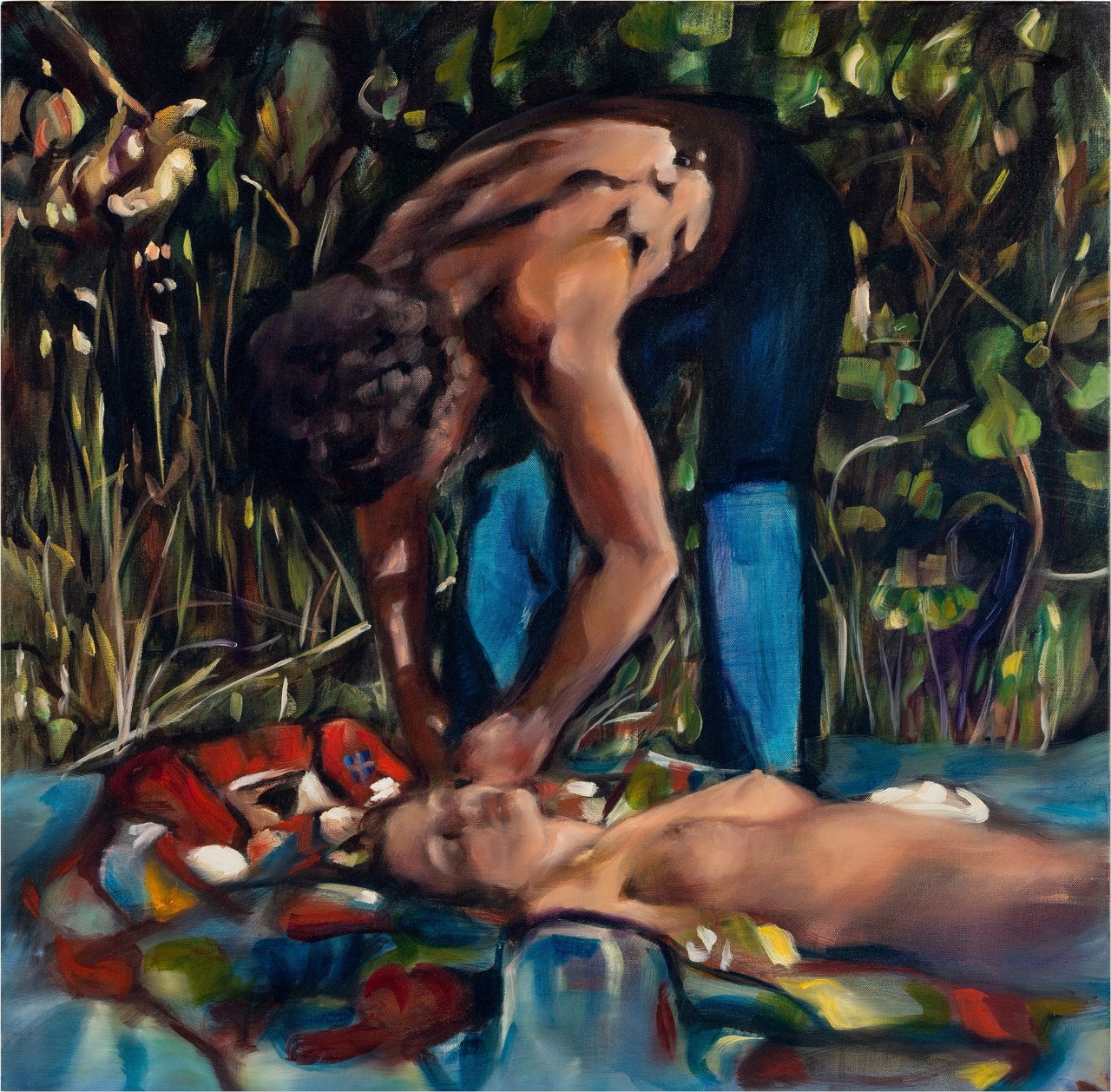
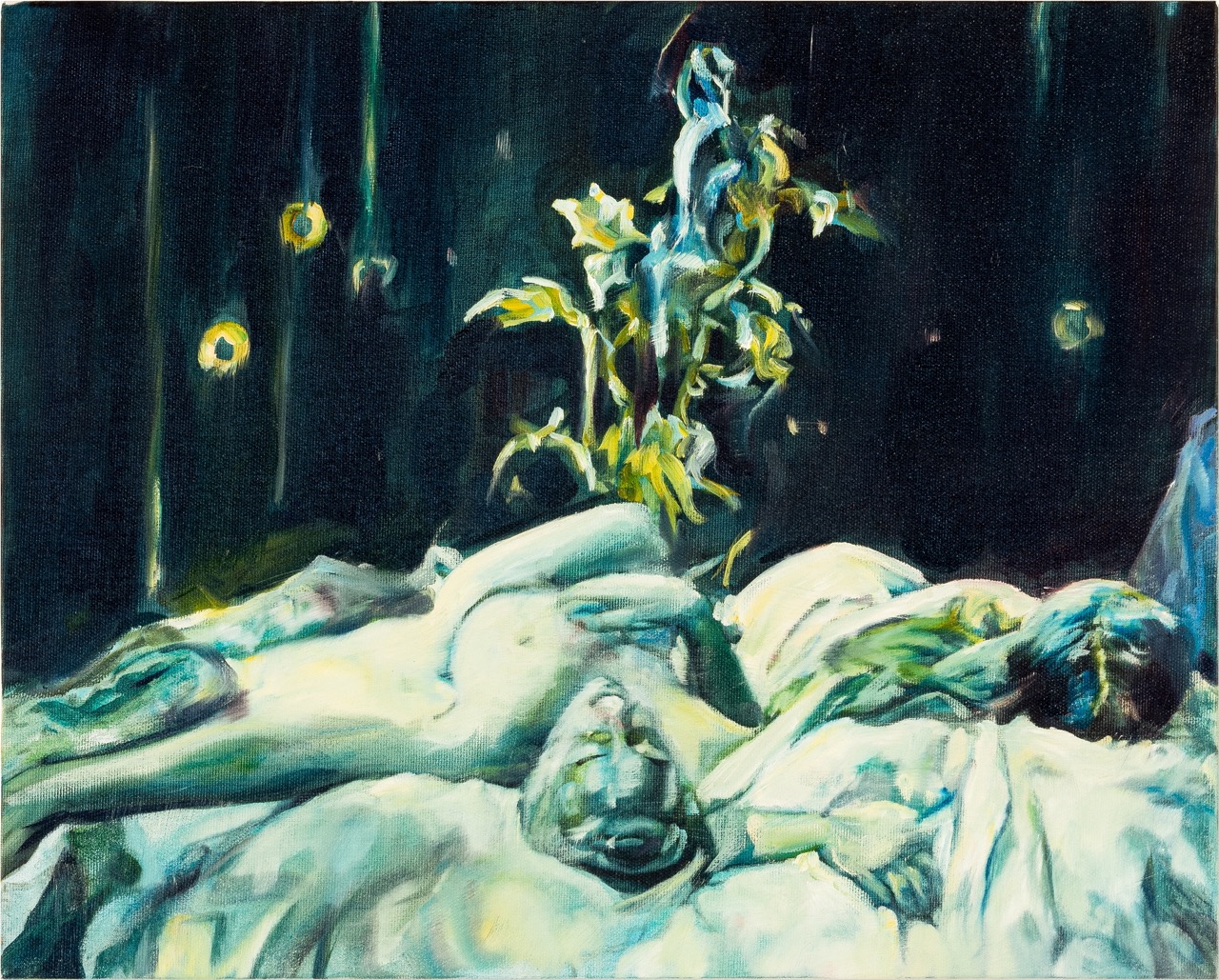
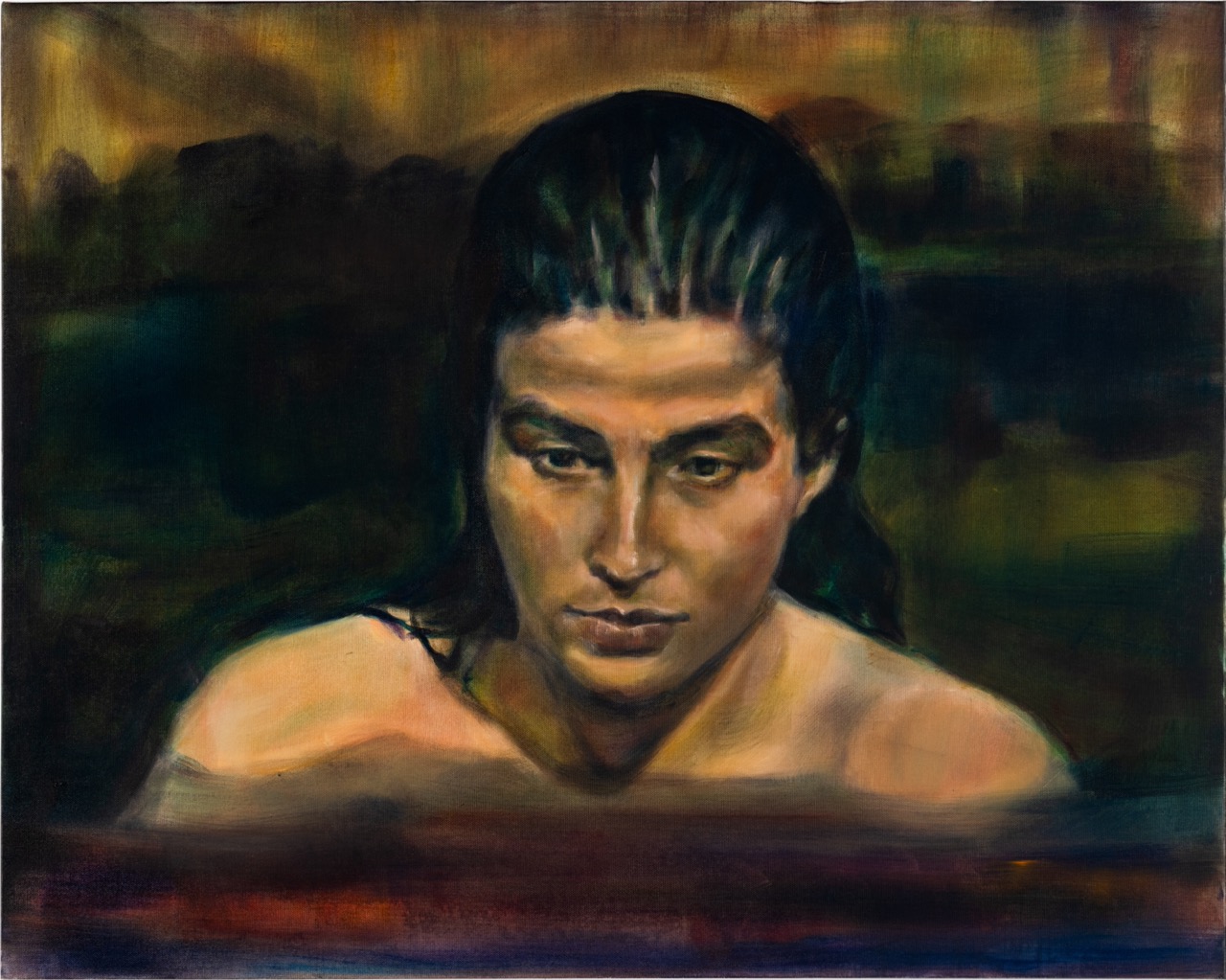
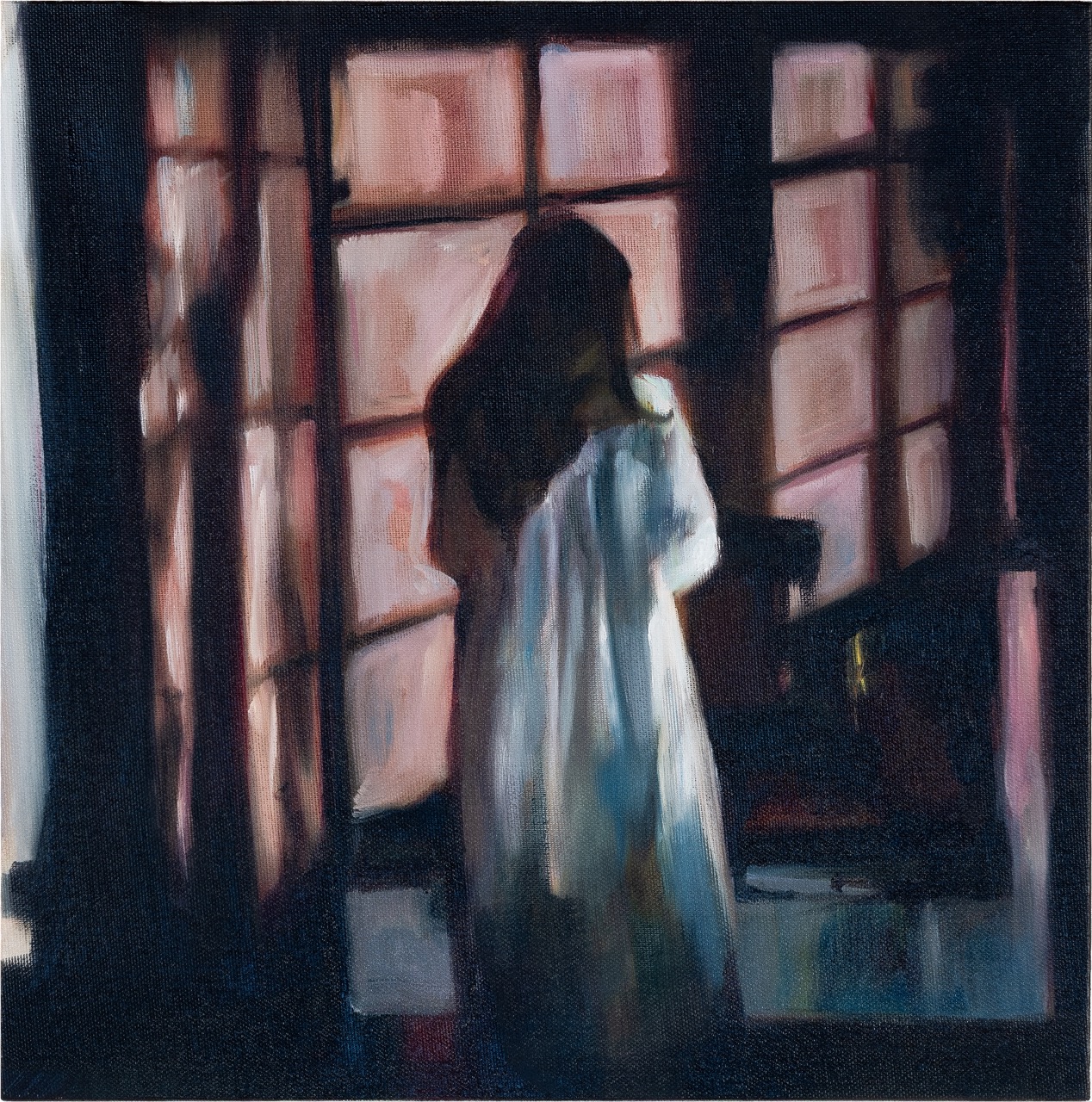
Iva Lulashi, on the other hand, denies water in order to set it on fire, as if fire were its unconscious. Her paintings are saturated with a heat that rises from beneath the surface: the pictorial matter pulses, flares, engulfs the figures in a visual magma that is both memory and desire. When the seascape appears — and it appears rarely — it becomes an unreal, blazing vision: a landscape mottled with reds and oranges, where the sun at its zenith erases all shadows. It is unclear whether it is dawn, dusk, or the absolute noon of demons — that suspended, sacred, unsettling moment in which everything vibrates before fixing into form. Two kneeling figures, enigmatic as sphinxes, seek and touch each other, immersed in a light that seems to come from a memory too intense to be looked at with open eyes. Lulashi’s images are seen through an eyelid that opens and closes too quickly: an image given already on the verge of vanishing.
It is within this tension that the exhibition finds its territory: a sentimental and poetic dialogue between two gazes. The reference to Cesare Pavese’s Dialogues with Leucò — particularly the dialogue between Calypso and Odysseus — is not a literary pretext but a key. Here myth becomes contemporary: Calypso accepting her horizon and Odysseus unable to stop; the weariness of destiny; the impossible return; the desire to hold the instant still and the stubborn refusal to do so. Immortality as the acceptance of the moment; mortality as the nostalgia for a future.
Lontano dal Mare is this: a place where what has been does not return but continues to ask to be seen. A landscape that burns and withdraws. A wave about to arrive and that perhaps will never arrive. A distance from which images emerge like dreams, or like memories that, though far away, never cease to touch the shore.
Milovan Farronato
Iva Lulashi moved to Italy in 1997 and enrolled at the Academy of Fine Arts in Venice in 2007, where she began exploring painting as a space of desire, memory, and ideology. In 2024, she returned to Venice to represent Albania at the Biennale, completing the circle between education and vision. Her practice is rooted in contrasts: restrained eroticism meets the clear rhetoric of communist propaganda, generating images that hover between attraction and ideological distance. In her most recent phase, she evokes Albanian folklore through legends she heard as a child and that have been passed down through generations, now interwoven with mythological figures rediscovered in theatre. The result is a visual repertoire where the intimate becomes epic and myth gently slips into the realm of contemporary imagination.
Iva Lulashi was born in Tirana, Albania, in 1988.
Her recent solo exhibitions include Neither in Heaven nor on Earth, Spurs Beijing (2025); Massimo De Carlo Piece Unique (2025); Love as a Glass of Water, Albanian Pavilion, 60th Venice Biennale (2024); Girandoti girandomi, Ordet, hosted by Massimo Giorgetti, Milan (2024); Libere e desideranti, Church of Santa Caterina, curated by Collezione Giuseppe Iannaccone, Corniglia (2021); Love as a Glass of Water, Salzburger Kunstverein, Salzburg; and Eroticommunism, Prometeo Gallery, Milan. She has also taken part in numerous group exhibitions, including Italian Painting Today, Triennale Milano, curated by Damiano Gullì (2023); Twilight is a Place of Promise, Esther Schipper, Berlin (2024); PUBLIC SECRETS, The Breeder, Athens (2025); 18° Quadriennale d’arte. FANTASTICA, Palazzo delle Esposizioni, Rome (2025).
Thomas Braida (Gorizia, 1982) is an Italian painter who lives and works between Venice and Dobbia. His practice is distinguished by a dense, layered figurative language, where grotesque and symbolic elements merge with cultured references and dreamlike visions. After graduating from the Academy of Fine Arts in Venice in 2010 under the guidance of Carlo Di Raco, Braida has developed an extensive exhibition career, which has led him to exhibit in important institutions and galleries in Italy and abroad, including MAXXI, the Museo Nazionale Concordiese, GAM in Turin, Monitor (Rome, Lisbon, Pereto), and fairs such as Liste Basel and Art Brussels. His work alternates between large pictorial cycles and more intimate installations, often linked to the natural world or personal iconography. His recent production shows an increasingly metaphysical and poetic reflection, as in the exhibitions Matematiche notturne (2023, Monitor Lisbon) and Tacciono i fiori (2025, Monitor Rome). Co-founder of the Malutta Foundation, Braida combines his individual activity with a strong collective vocation, participating in experimental projects, workshops, and residencies that mix painting, life, and storytelling.
Milovan Farronato is an independent curator and art critic. He curated the Italian Pavilion at the 58th Venice Biennale in 2019 and directed the Fiorucci Art Trust until its closure in 2021. He developed the itinerant residency project Roadside Picnic and, from 2011 to 2019, the annual Volcano Extravaganza festival, which began in Stromboli and later expanded to Naples in 2017 and Dhaka, Bangladesh, in 2018.
Together with Paulina Olowska, he founded the Mycorial Theater symposium, held in 2014 in Rabka, Poland, and in 2016 in São Paulo, Brazil. He also collaborated with the Serpentine Galleries on the Magazine Sessions (2016). Farronato conceived The Violent No!, which was part of the public program at the 14th Istanbul Biennale in 2015.
From 2005 to 2012, Farronato served as the director of the non-profit organization Viafarini and as a curator at the DOCVA Documentation Center for Visual Arts in Milan. From 2006 to 2010, he was Associate Curator at the Civic Gallery of Modena, he taught Visual Culture at the IUAV University, claDEM.
Among the exhibitions he has curated are: Nightfall, with Fernanda Brenner and Erika Verzutti at Mendes Wood DM, Brussels (2018); Nick Mauss, Illuminated Window at La Triennale and Torre Velasca, Milan (2017); Lucy McKenzie: La Kermesse Héroïque, the artist’s first solo exhibition in Italy, at the Bevilacqua La Masa Foundation, Venice (2017); a solo exhibition of Peter Doig, and of Guglielmo Castelli also for Bevilacqua La Masa Foundation, Venice (2015); and Arimortis at the Museo del Novecento, Milan (2013), co-curated with Roberto Cuoghi.
Farronato was a member of the curatorial team for the IV Dhaka Art Summit and served on the Development Committee of Chisenhale Gallery in London. He was part of the advisory board for the Turkish Pavilion at the Venice Biennale in both 2022 and 2024. He also co-founded the Archivio Chiara Fumai in Milan with Andrea Bellini.