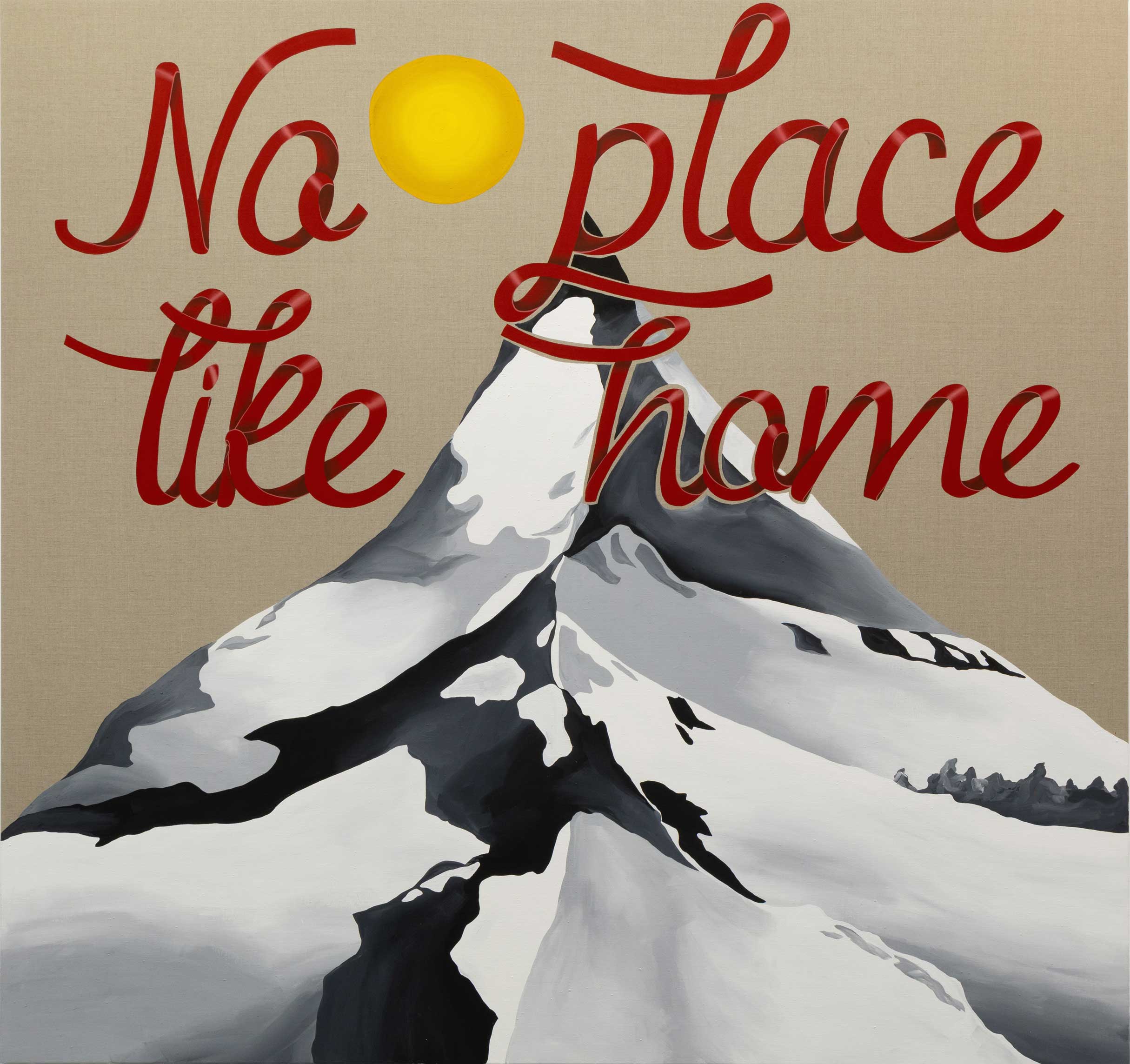
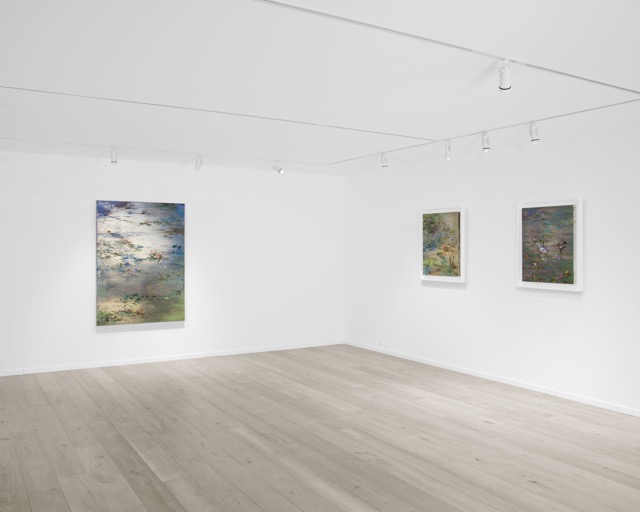
Mountains and Flowers brings together new paintings and works on paper by Nir Hod and Joel Mesler in a dialogue that is at once intimate and expansive, unfolding across landscape, language, surface, and reflection. Throughout art history, flowers and mountains have served as enduring motifs—forms through which painters have tested the limits of representation, emotion, and meaning. Flowers, from Dutch still lifes to modernist abstraction, have carried associations of beauty, desire, fragility, decay, and the passage of time. Mountains, from Romantic landscapes to postwar painting, have stood as emblems of permanence, transcendence, and the human impulse to project inward states onto the natural world.
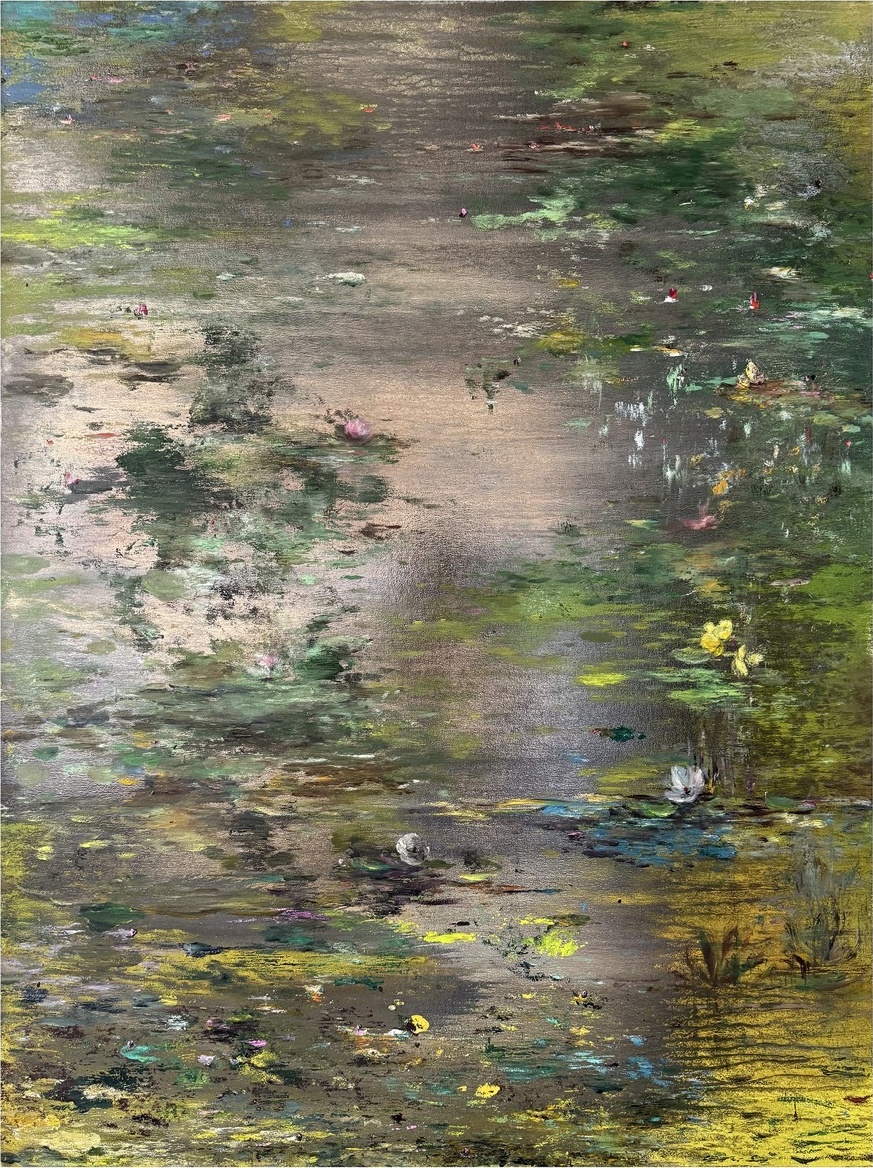
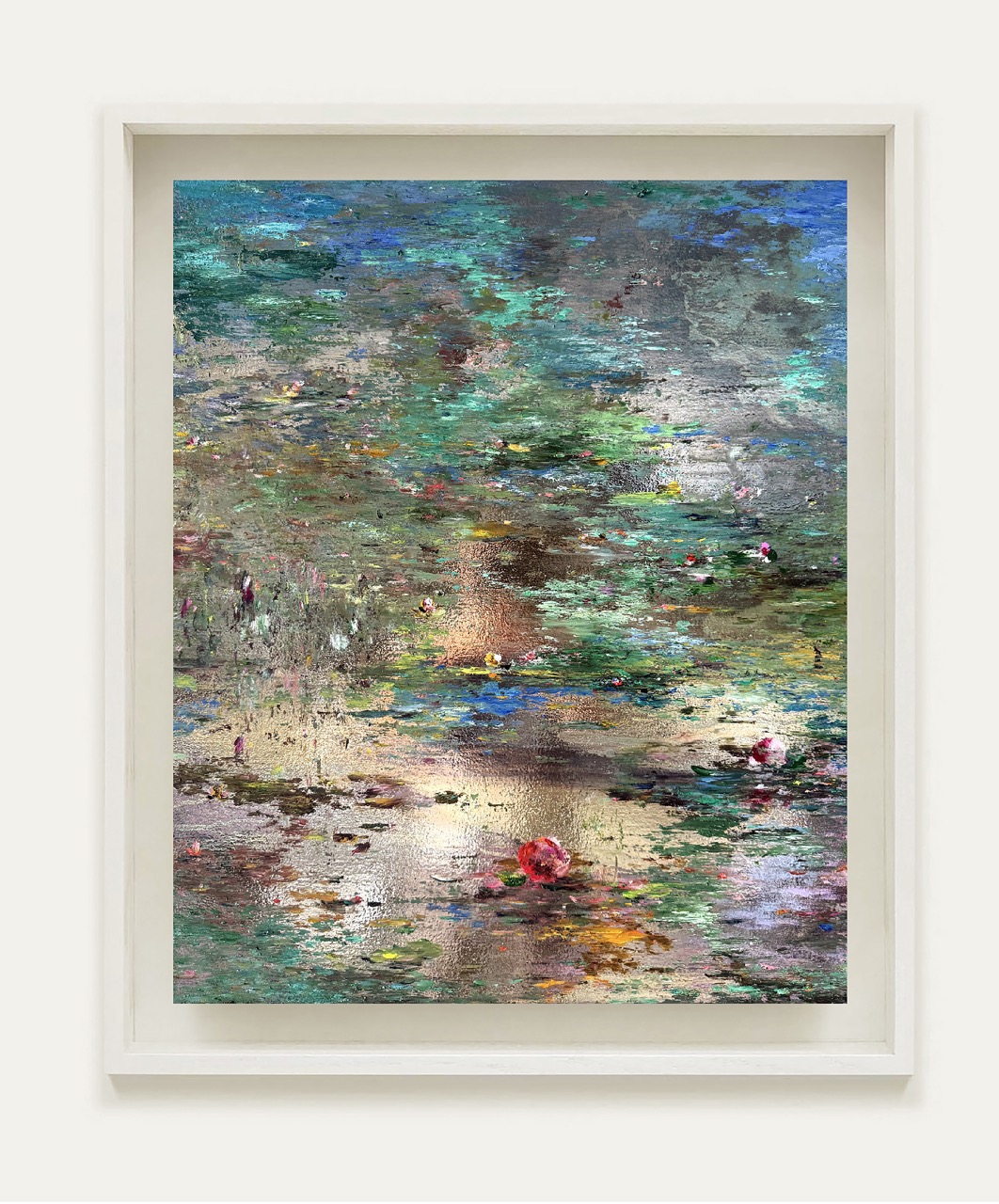
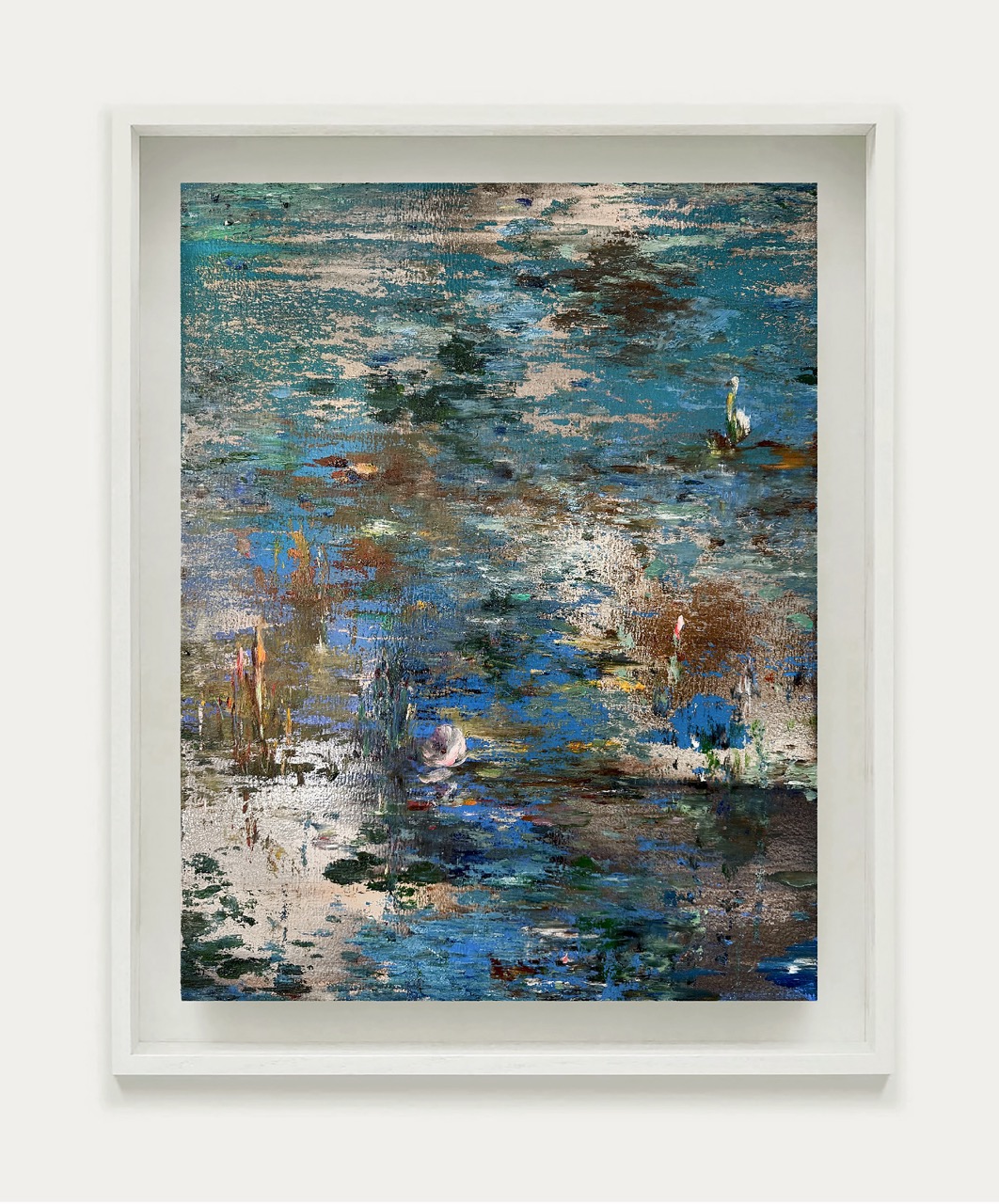
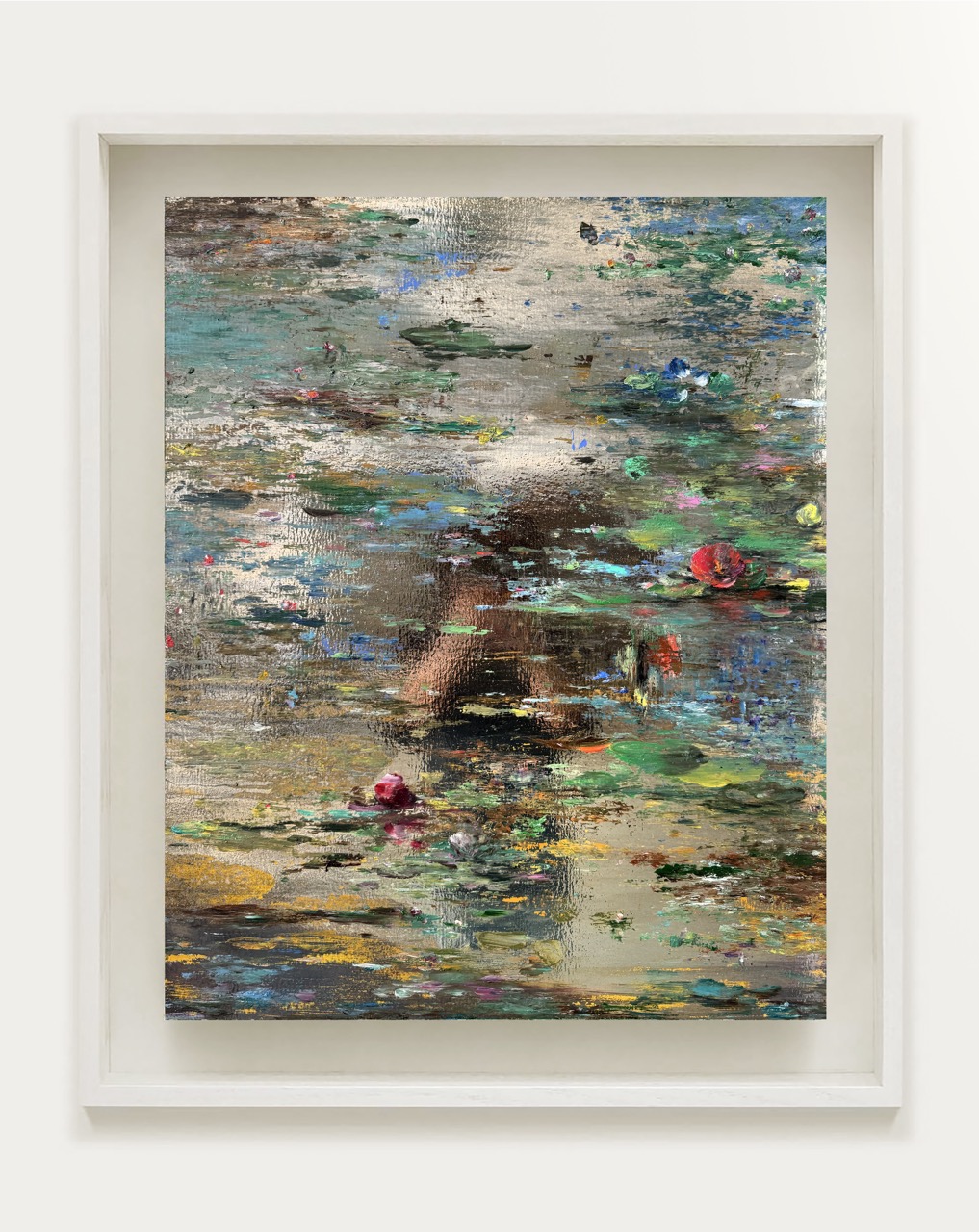
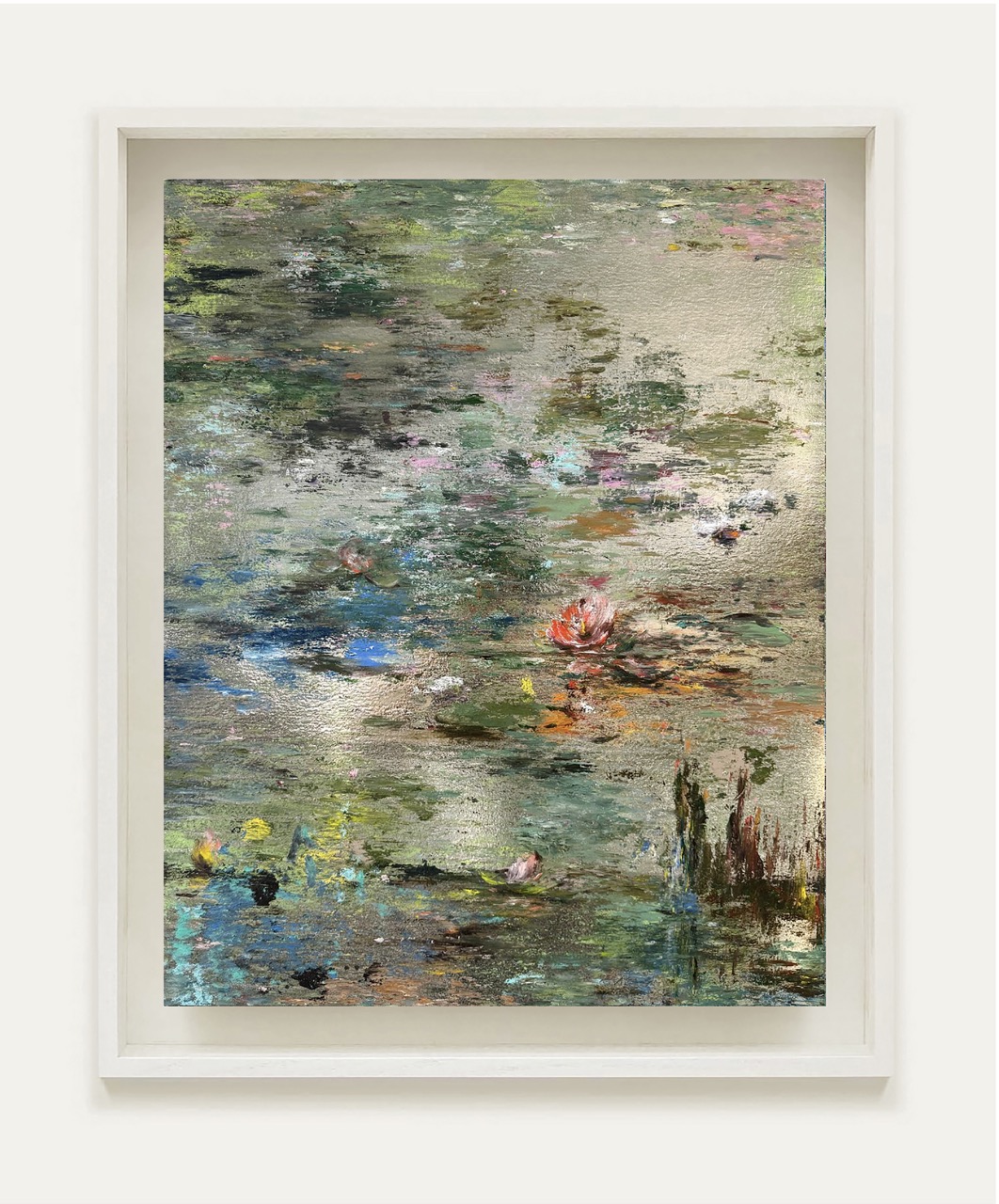
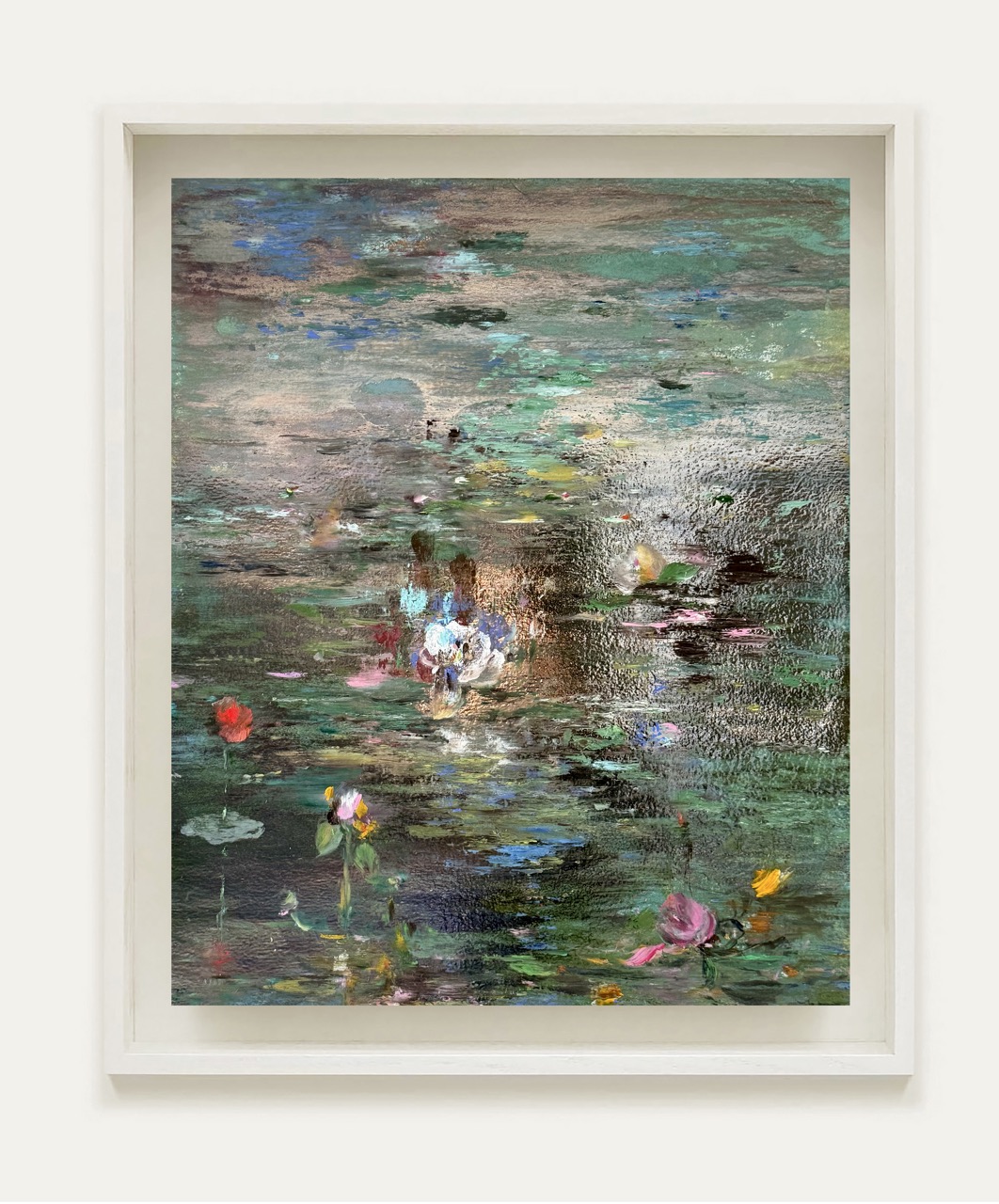
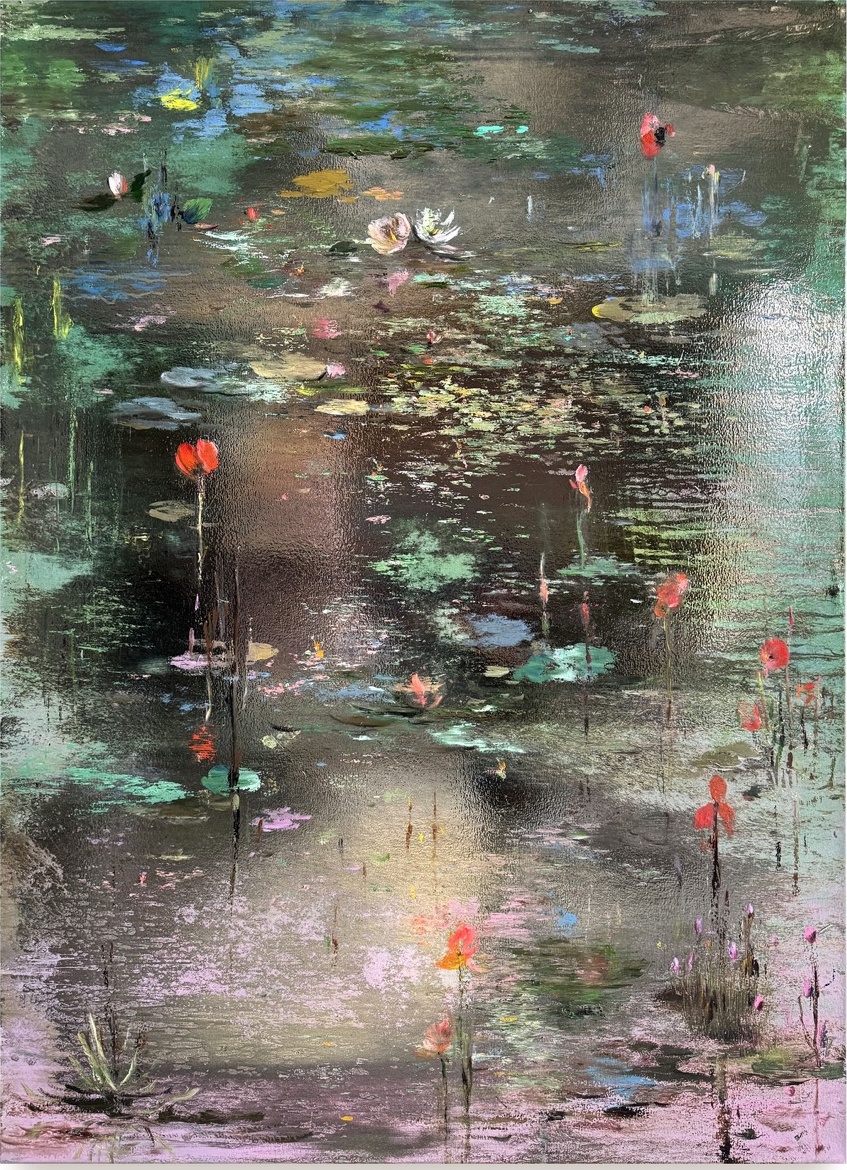
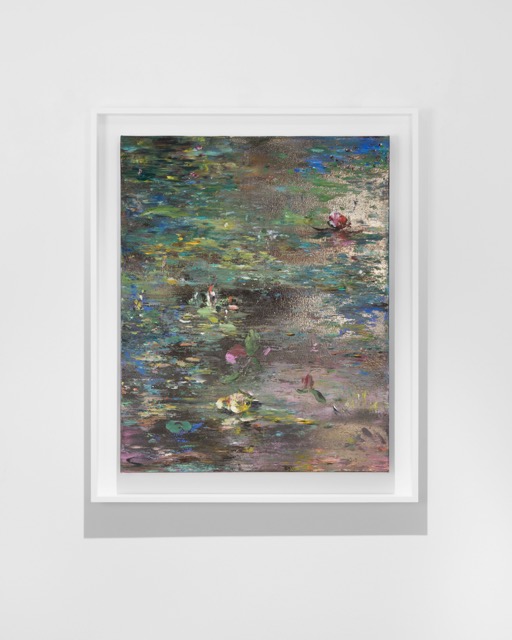
In this two-person exhibition, Hod and Mesler approach these motifs not as inherited symbols to be revisited, but as painterly problems to be reactivated—as emotional and psychological structures. Nir Hod’s 100 Years Are Not Enough series stems from a period of deep observation in nature and from the conviction that “one hundred years are not enough” to fully apprehend life’s wonder. These works conjure dreamlike landscapes in which floral forms hover above shimmering, reflective chromatic surfaces. Hod’s flowers appear less as botanical subjects than as emotional surrogates—gestures of intimacy, excess, and vulnerability. Mesler’s mountains, by contrast, emerge not as topographical facts but as psychological terrains shaped by memory and distance. In both practices, the history of painting is present but unsettled: surfaces are layered, images oscillate between figuration and abstraction, and the act of looking becomes inseparable from feeling.
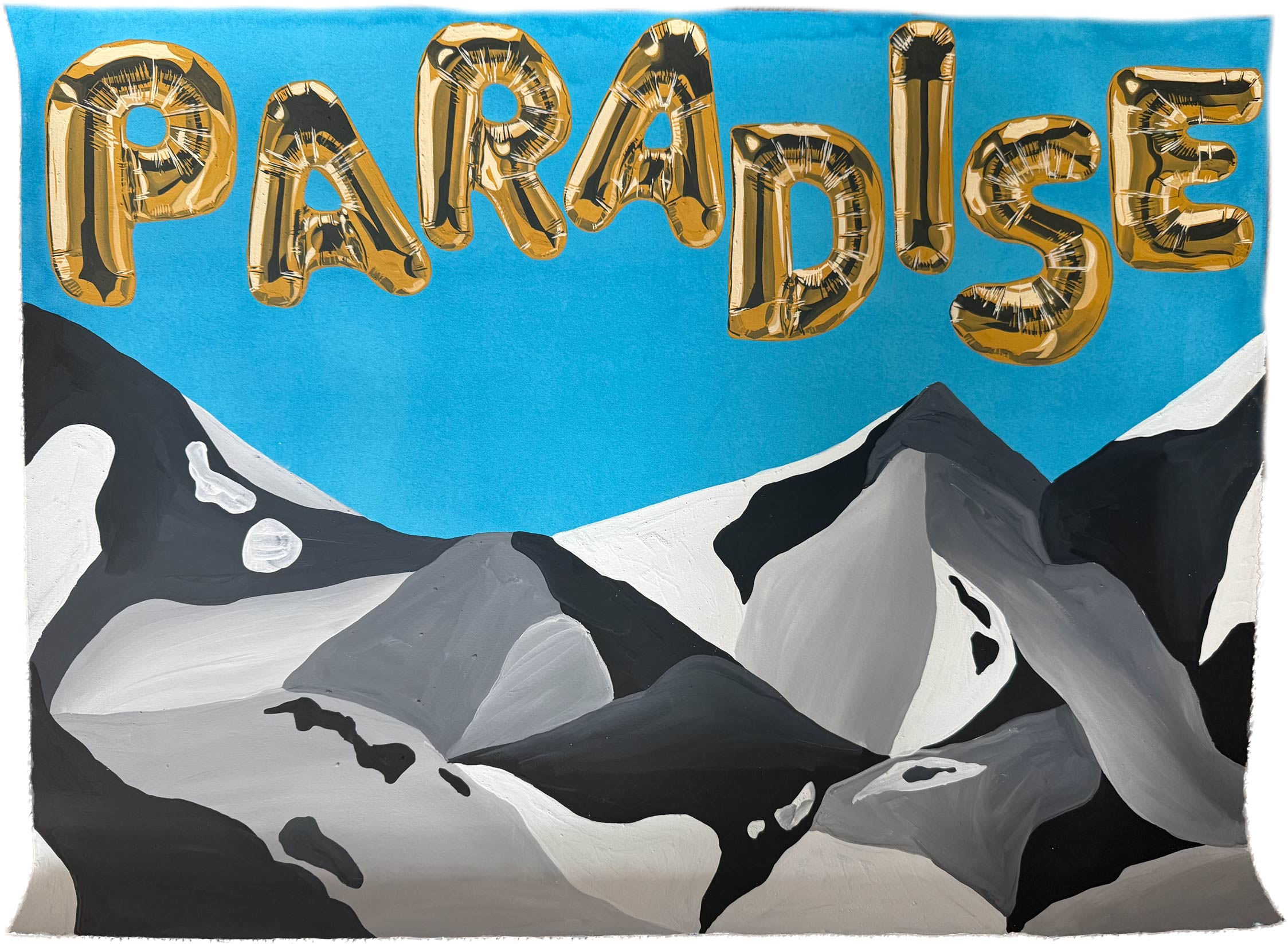
For both artists, landscape is not a neutral backdrop but a lived terrain. Mesler’s mountains suggest ascent, effort, and the ongoing work of becoming—less a vision of paradise than a record of action. They propose life as something encountered through challenge, as movement rather than stasis. Hod’s gardens and floral landscapes likewise resist any notion of untouched Eden. While they buzz with life and shimmer with seduction, they are marked by longing, loss, and otherworldliness, carrying the sense that paradise, if it exists at all, is already fractured. In both bodies of work, darkness and light are inseparable; beauty does not negate struggle but emerges from it.
Central to Hod’s work is his innovative use of reflective chrome surfaces. These mirror-like planes are not simply finishes but active agents within the paintings. Beneath them lie richly worked layers of oil paint that are partially revealed and partially obscured through a demanding, destructive process. The chrome is scraped, eroded, and chemically altered, forcing the image to hover between presence and disappearance. The resulting surface reflects the viewer back into the work while simultaneously withholding full access to what lies beneath. Impermanence is heightened by the viewer’s own fleeting reflection. The series title underscores this tension: no amount of time is sufficient to fully grasp or hold onto beauty precisely because it is bound to loss.
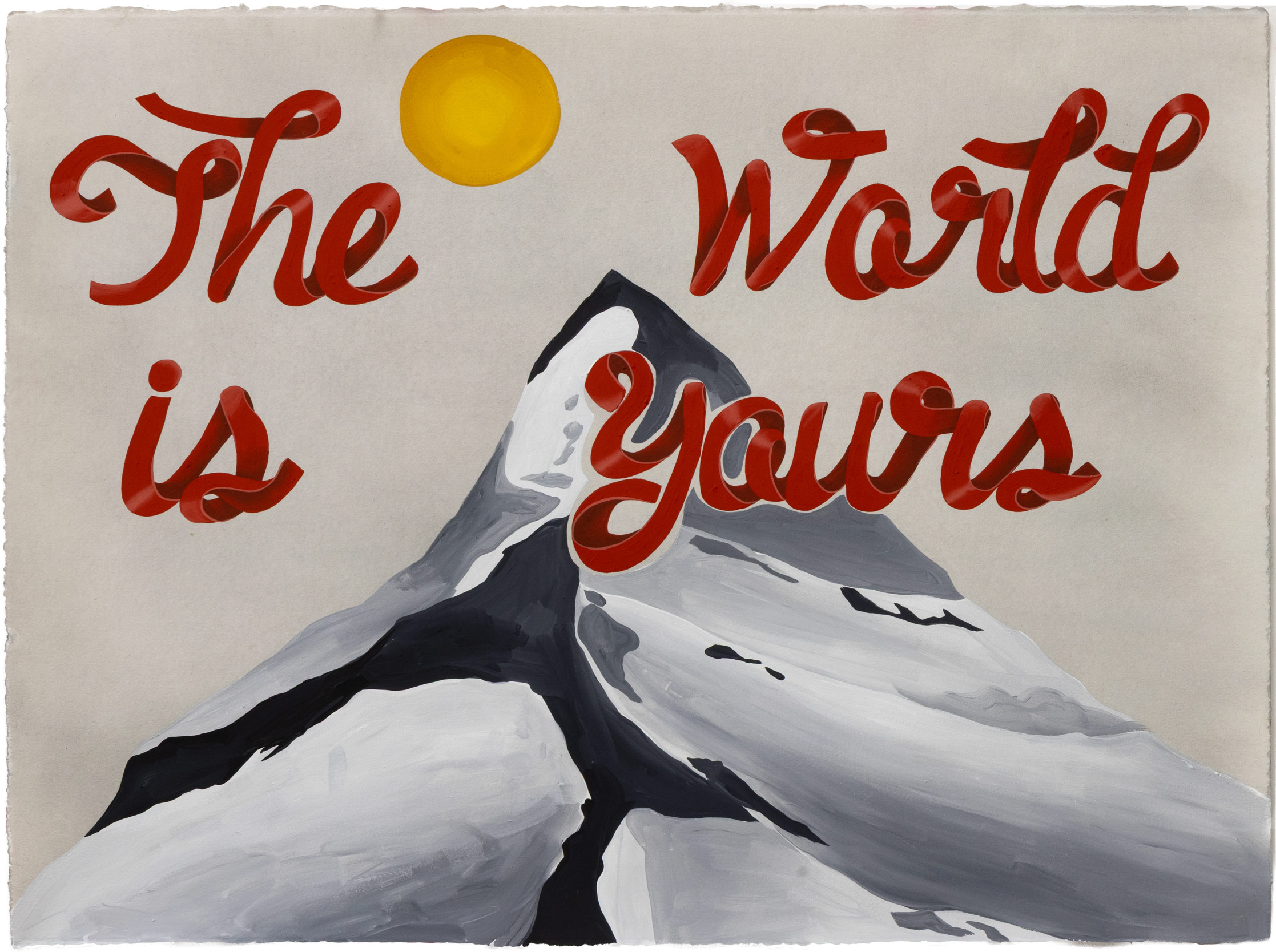
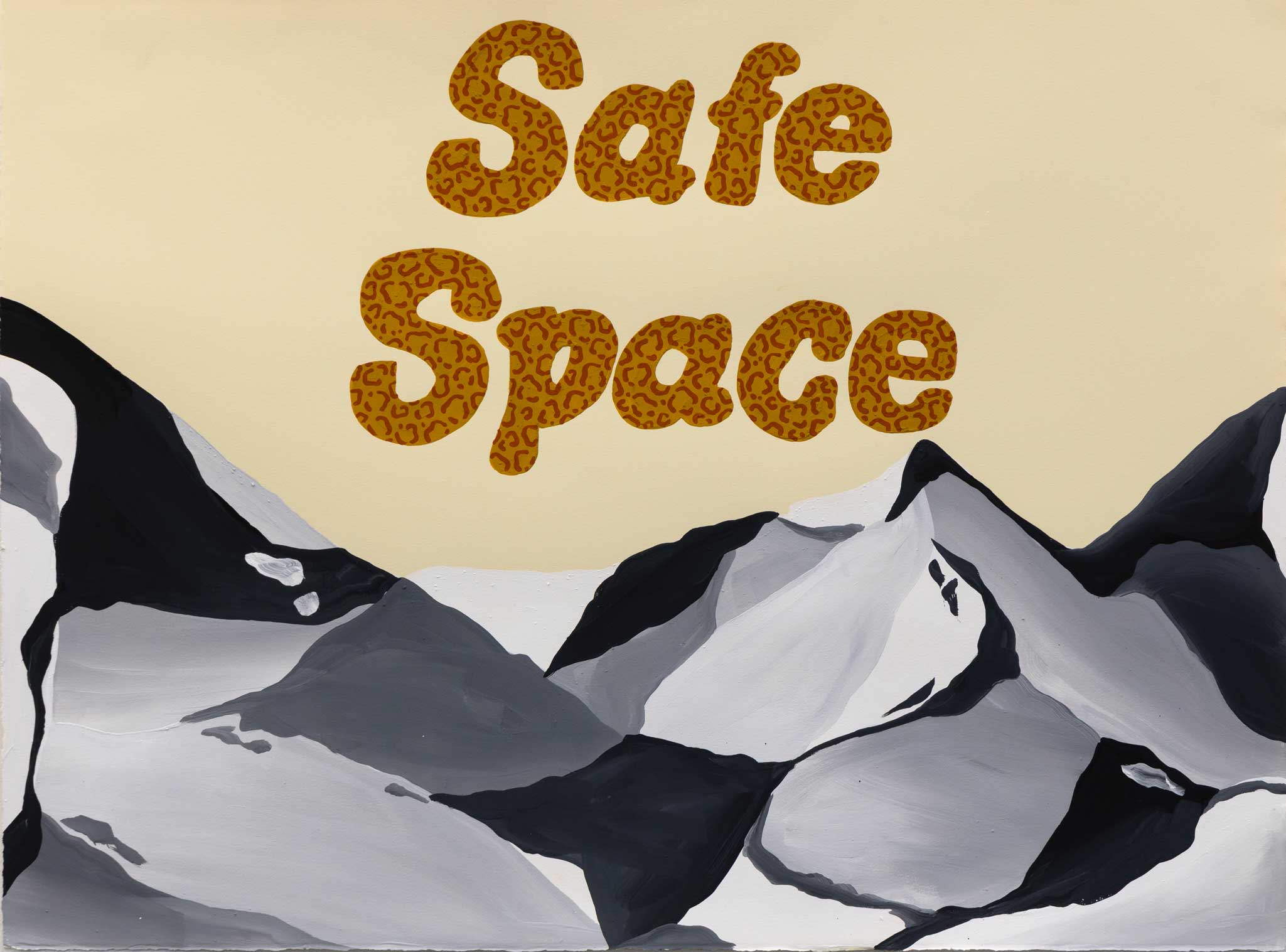
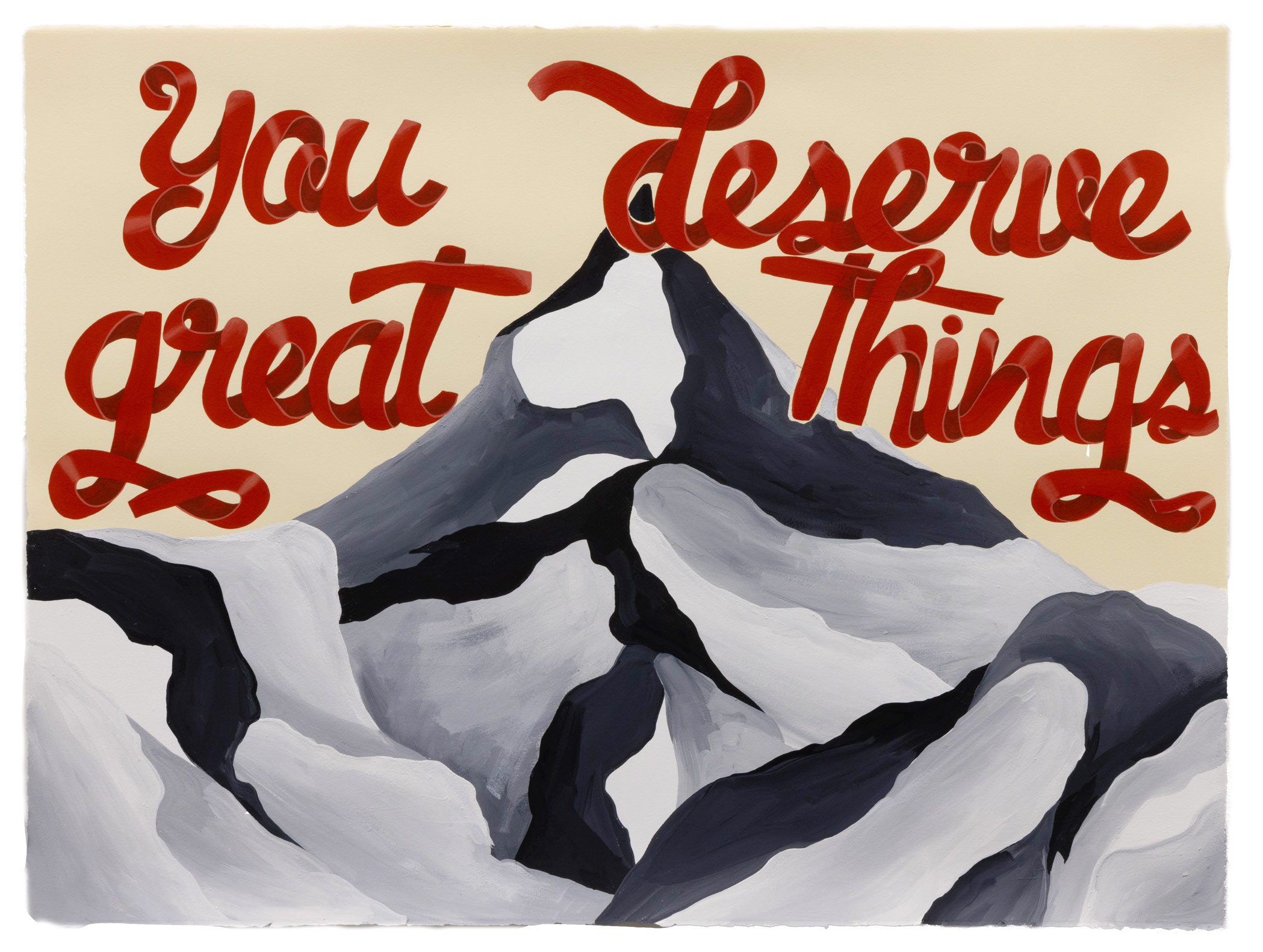
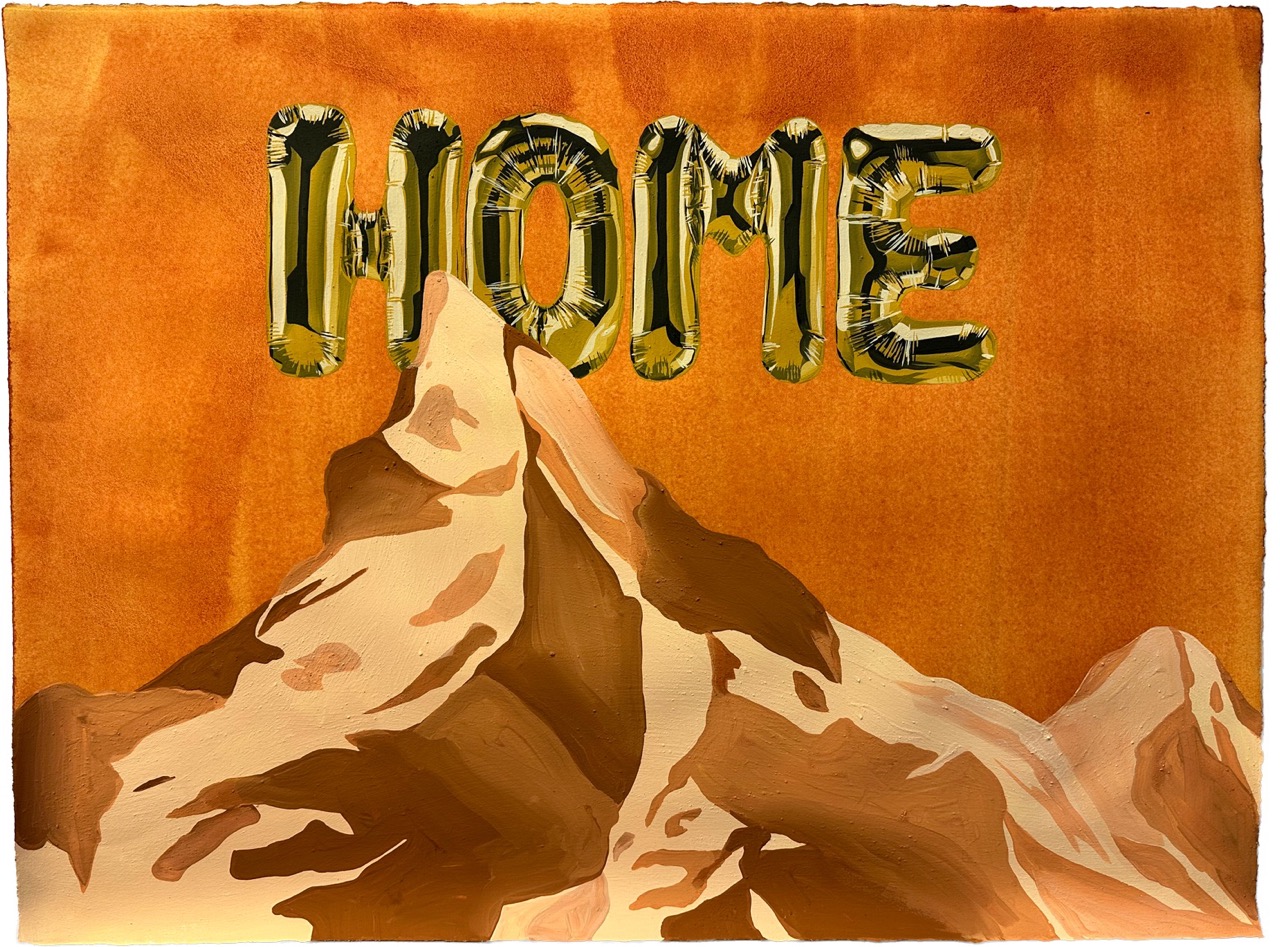
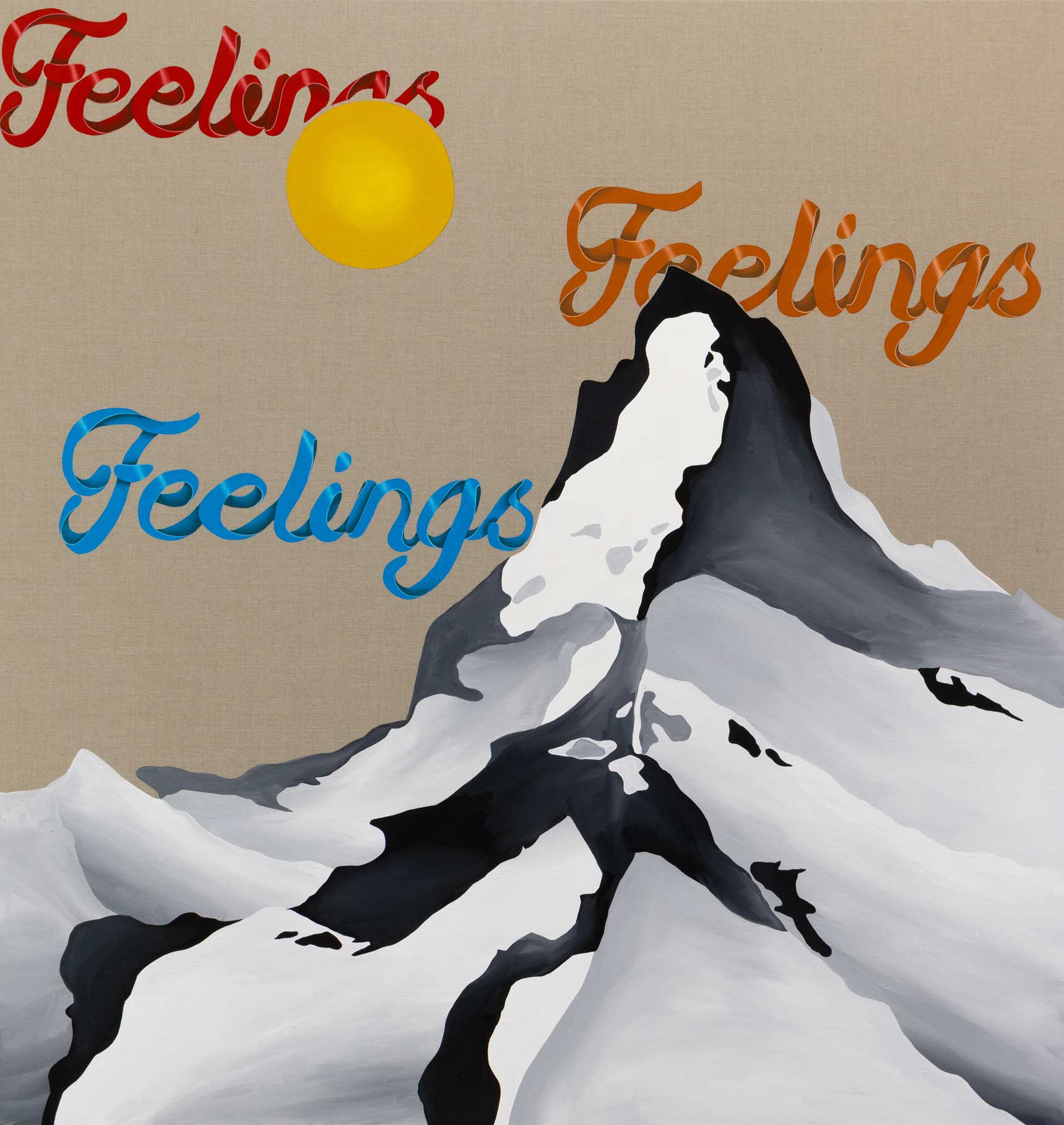
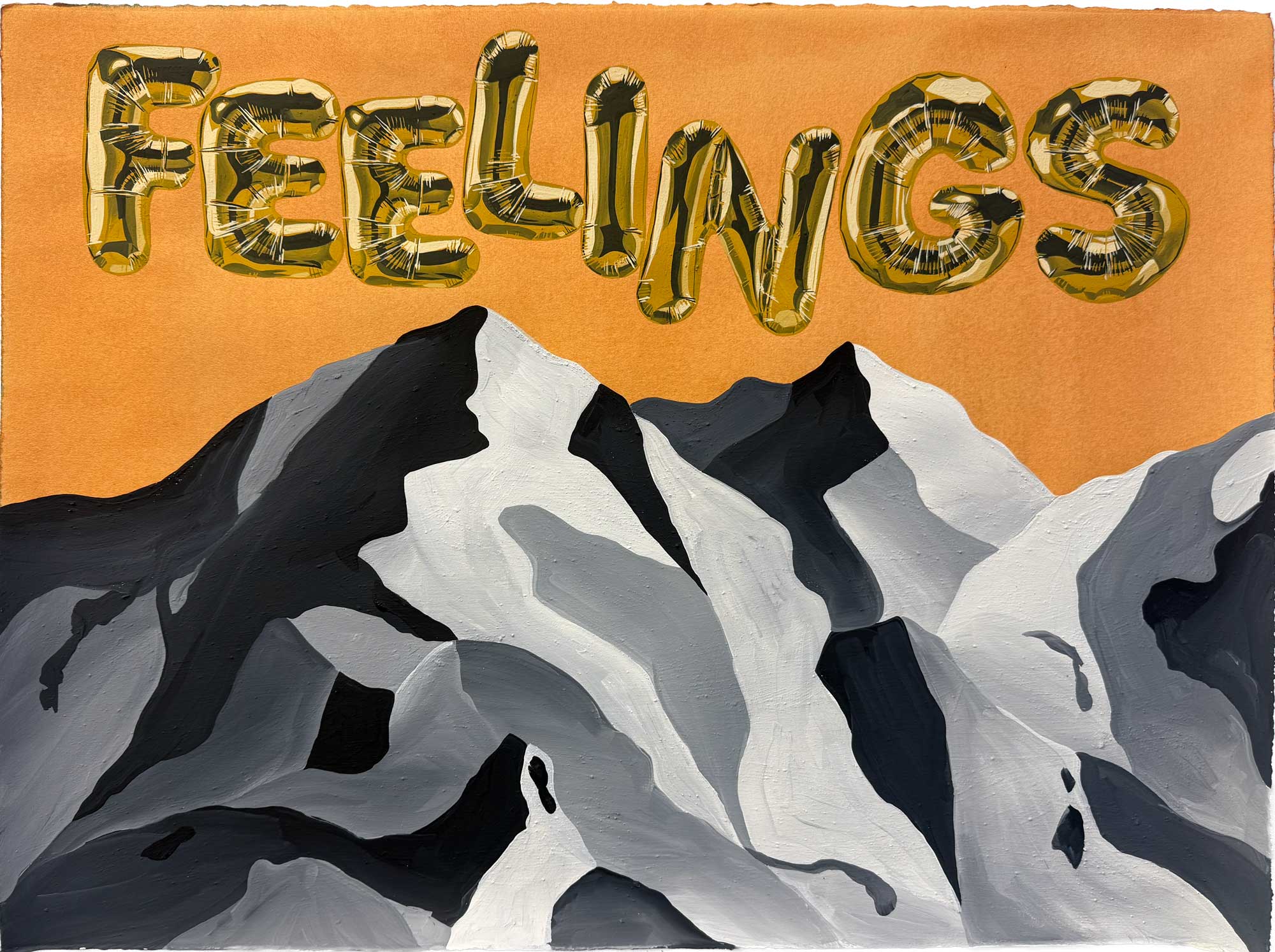
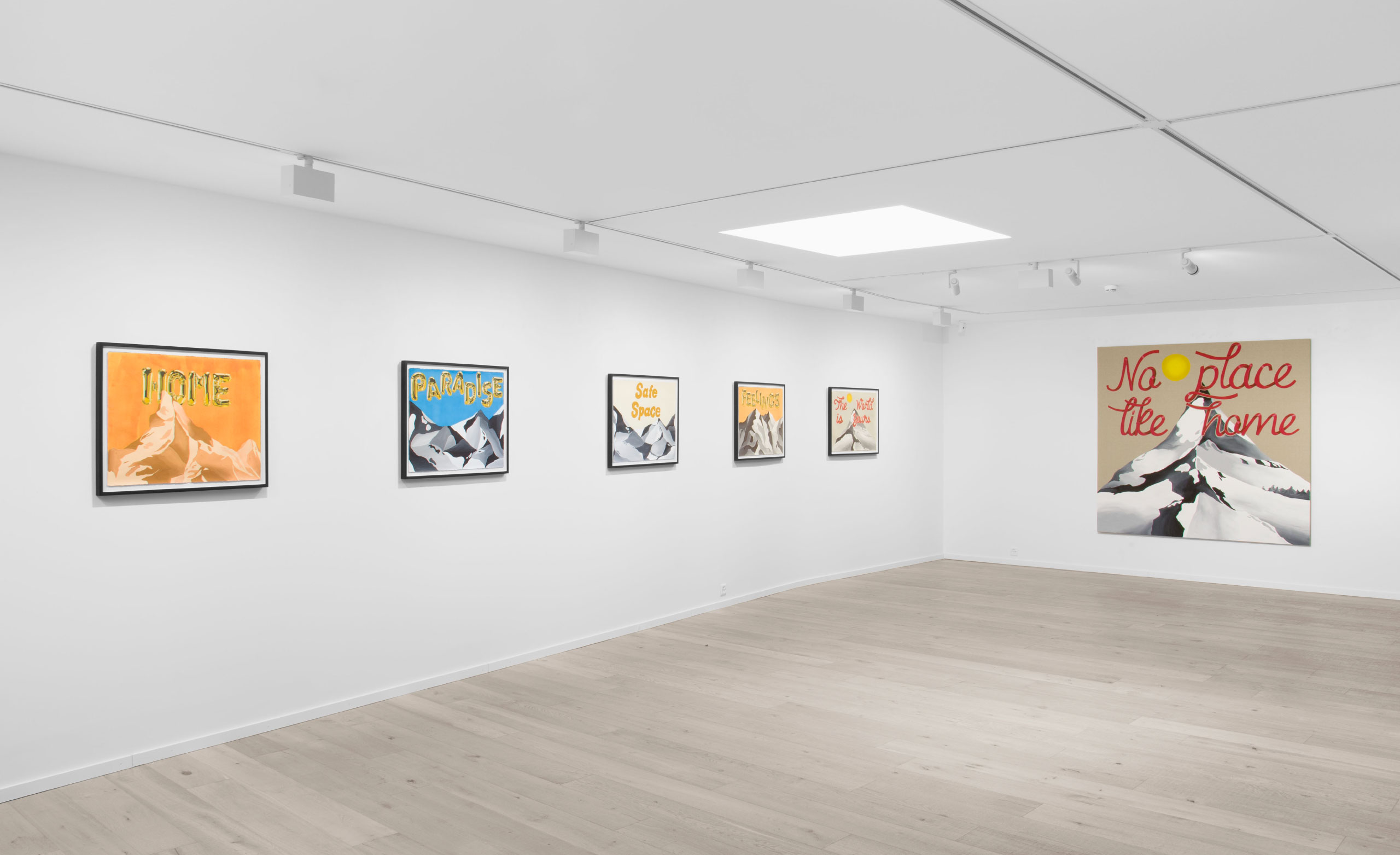
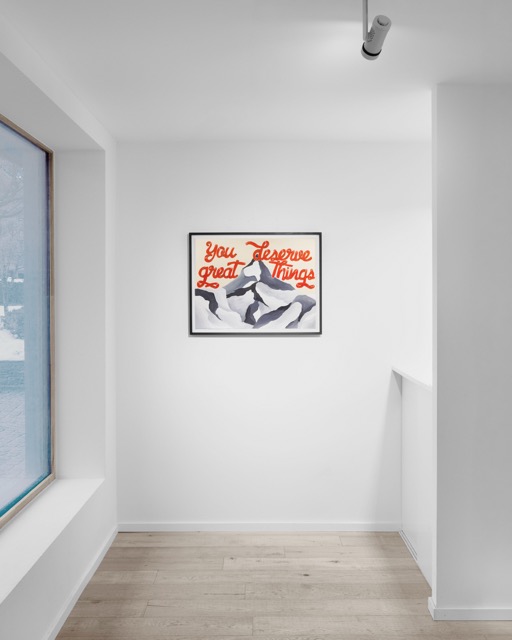
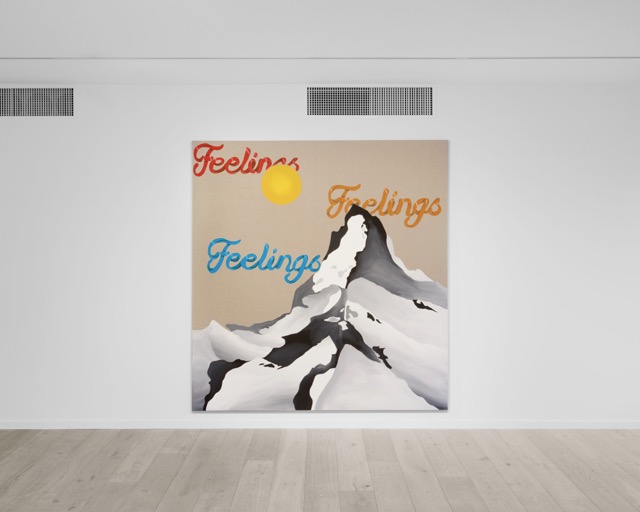
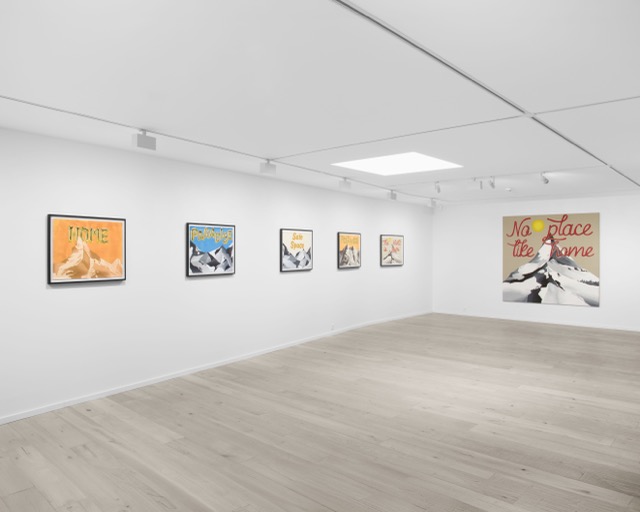
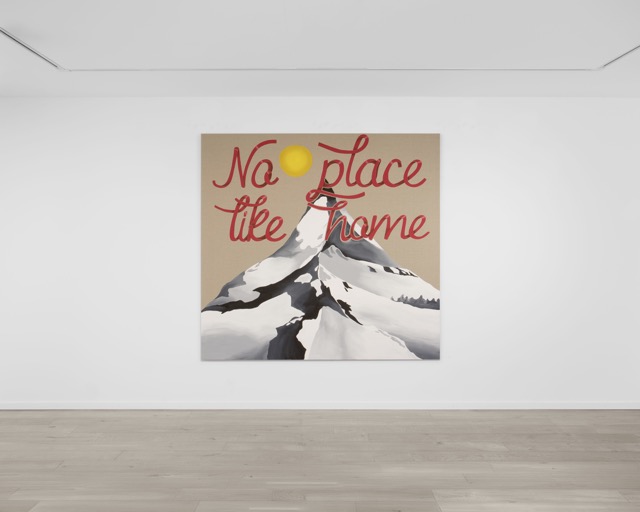
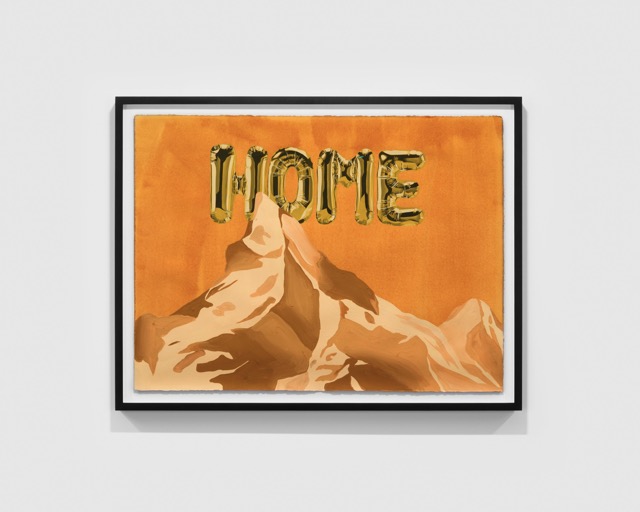
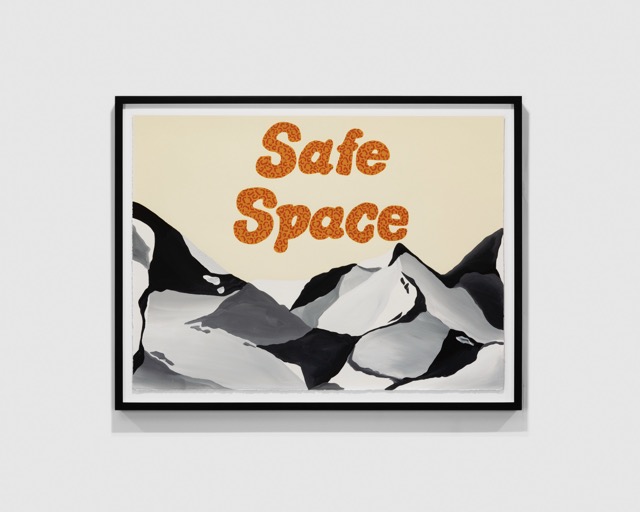
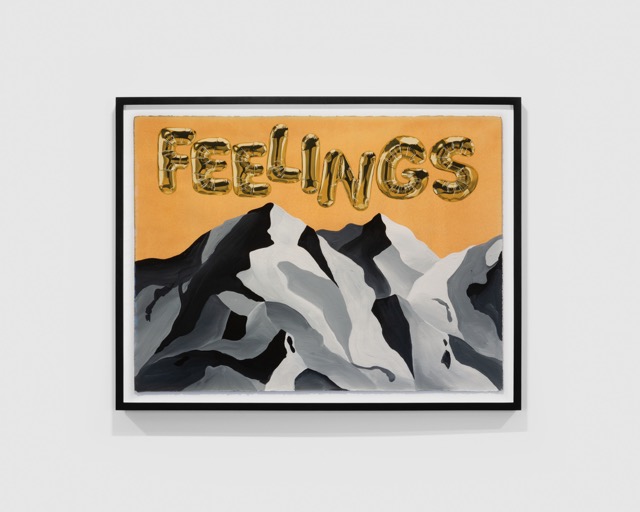
If Hod’s paintings reflect the viewer physically, Mesler’s works perform a parallel operation through language. His paintings and drawings incorporate short phrases—The World Is Yours, Safe Space, Feelings, Home, You Deserve Great Things—that resemble text messages, affirmations, or private thoughts. These textual elements—often rendered as shiny chromatic balloons in a tongue-in-cheek nod to Pop art—function as conceptual mirrors. Rather than returning the viewer’s image, they reflect back emotional states, desires, and anxieties that feel at once deeply personal and broadly shared.
Mesler’s texts are deliberately open-ended. Phrases that initially sound reassuring or affirmational quickly become ambiguous, even destabilizing. Positive messaging tips into emptiness, comfort slides into irony. In encountering these works, viewers are compelled to complete them internally, locating themselves within their emotional register. The World Is Yours may read as empowerment or as hollow promise; Safe Space, spelled out in spotted letters above a shadowed, snow-blanketed valley, hovers between refuge and unease. Feelings, floating in golden balloon letters above pointed pistes, collapses emotional complexity into a single, loaded word. The act of reading becomes an act of self-recognition; language becomes a mirror not of the body, but of interior life.
What ultimately connects Hod’s reflective surfaces and Mesler’s textual ones is an insistence on viewer participation without prescription. Both artists construct scenarios rather than statements. Meaning is not delivered but discovered, shaped by the viewer’s own experiences of longing, grief, desire, and hope. This openness is not evasive but generous, acknowledging that life is lived from the inside and that perception is always colored by personal history.
Beauty plays a crucial—and risky—role in this exchange. Both artists openly embrace visual allure as a means of entry while resisting its reduction to decoration or superficial pleasure. In Hod’s work, lush surfaces lure the viewer toward foundations rooted in loneliness, decay, and memory. In Mesler’s, bright colors and legible phrases draw viewers into encounters with vulnerability and emotional exposure. Beauty here is not an endpoint but a threshold: an invitation into deeper, often uncomfortable territory.
In Mountains and Flowers, landscape becomes metaphor, surface becomes site, and reflection—whether optical or linguistic—becomes a means of connection. Together, Hod and Mesler propose painting and drawing as spaces in which beauty and pain, darkness and light, action and surrender coexist. The exhibition does not offer paradise. It offers movement—upward, outward, inward—asking viewers not simply to look, but to recognize themselves in the terrain before them, and to consider how interior experience might continue to find form through painting.