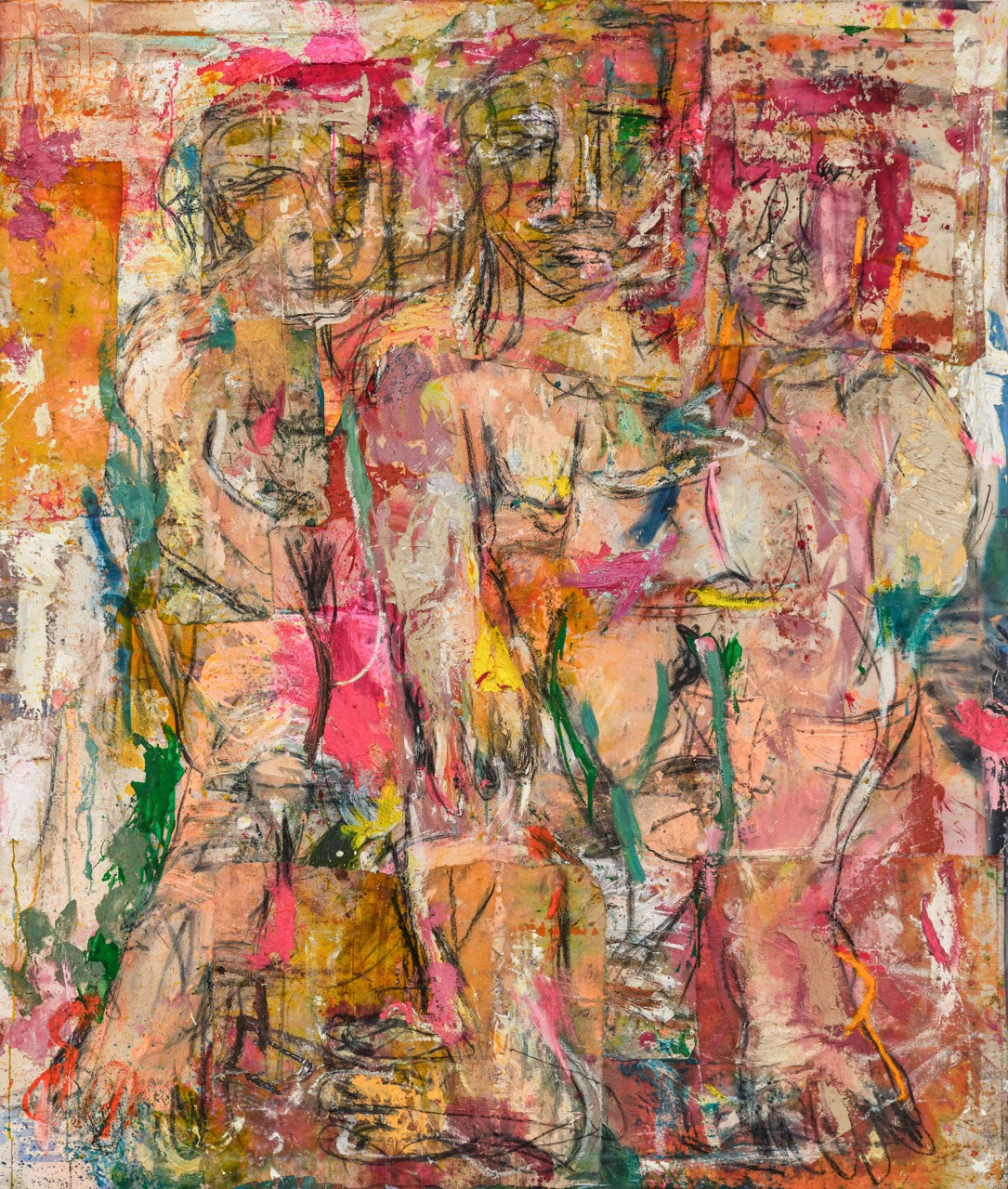
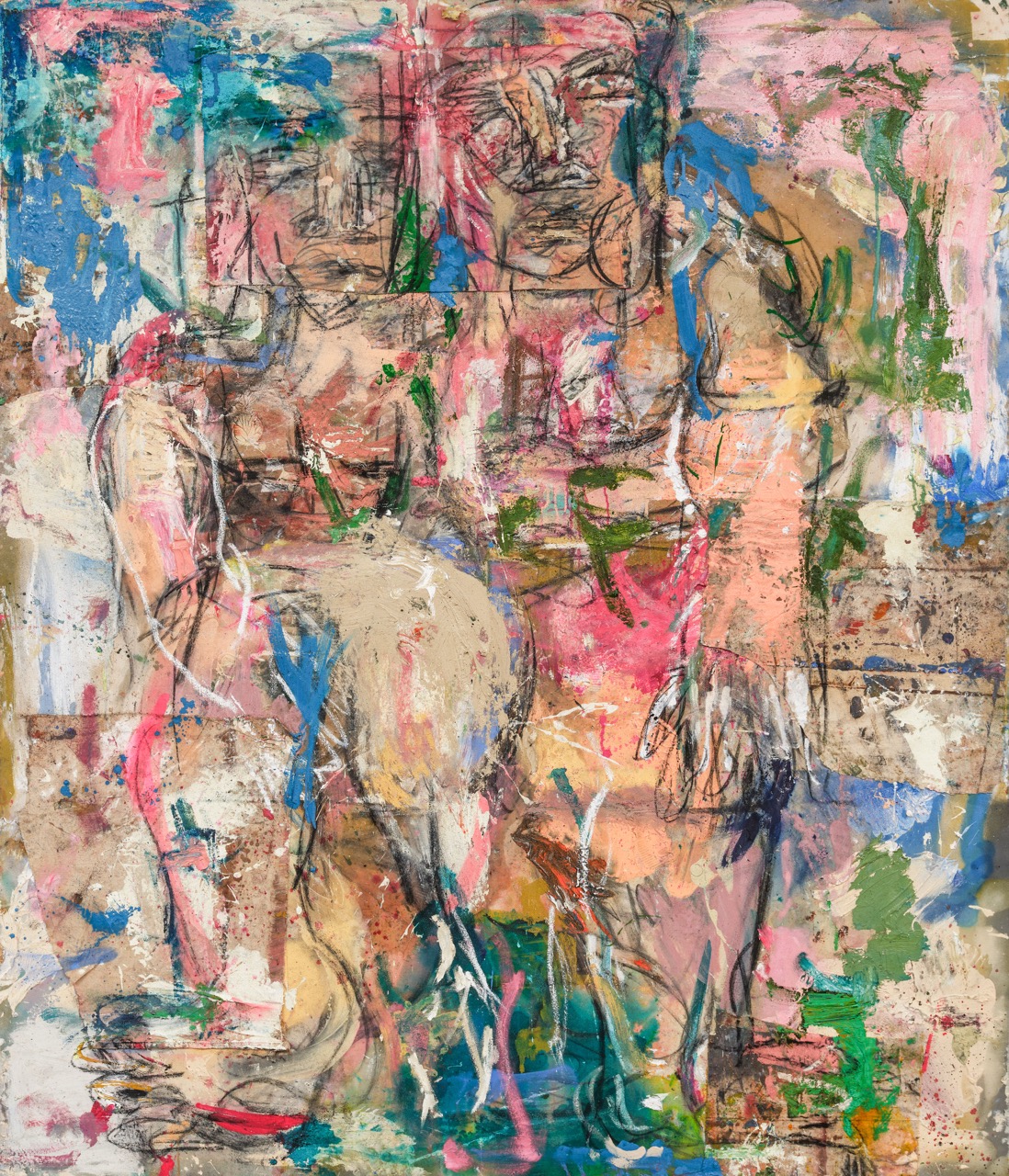
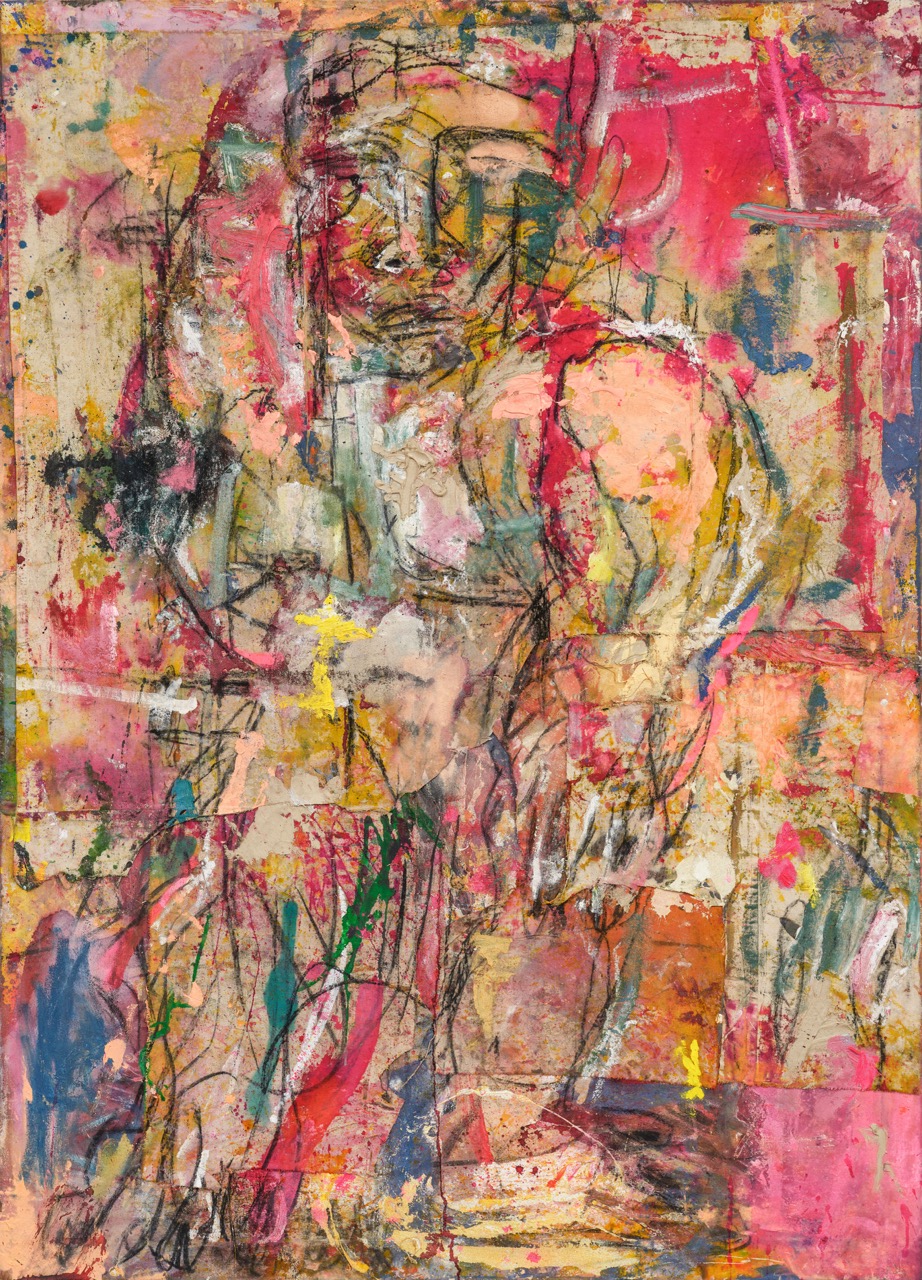
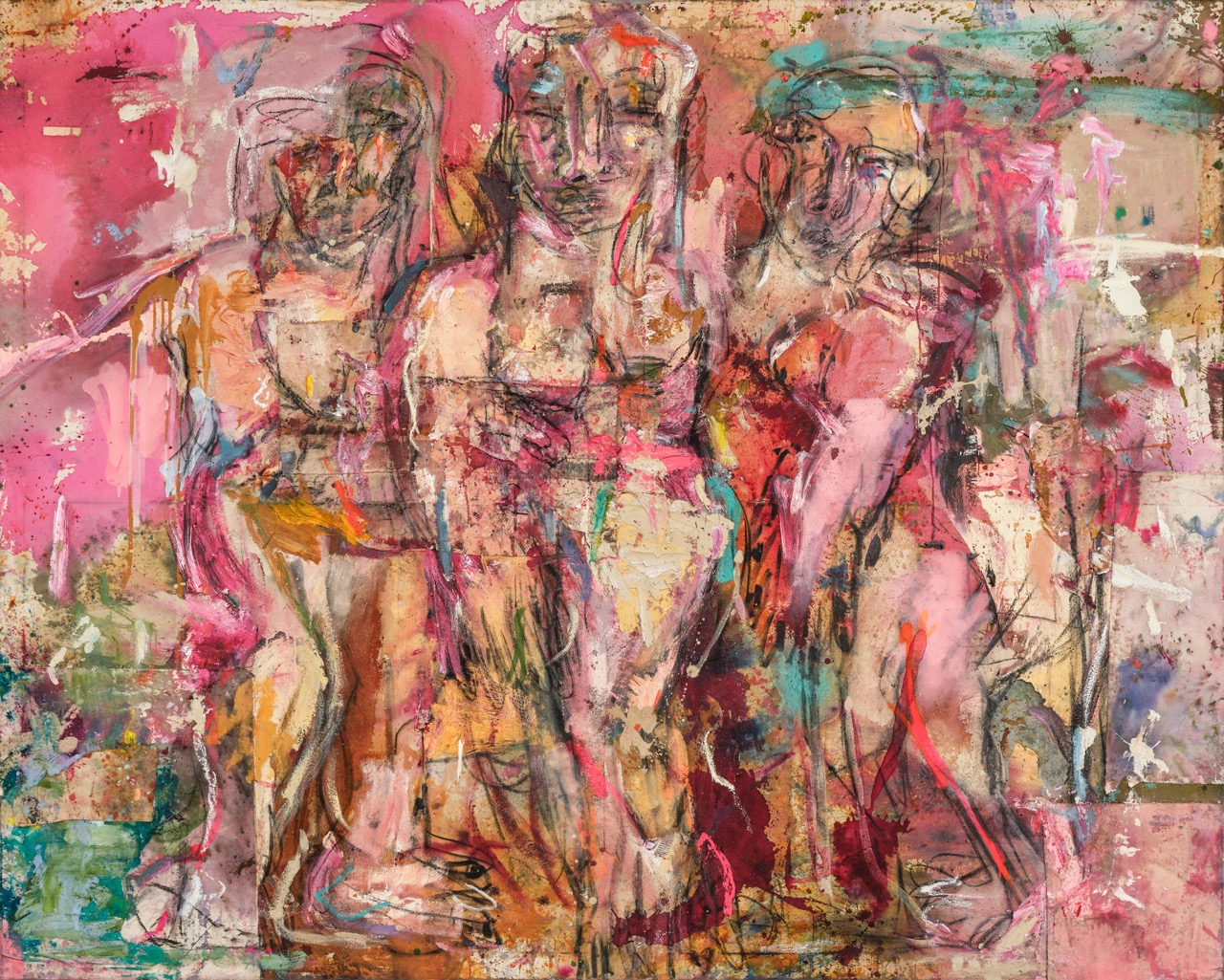
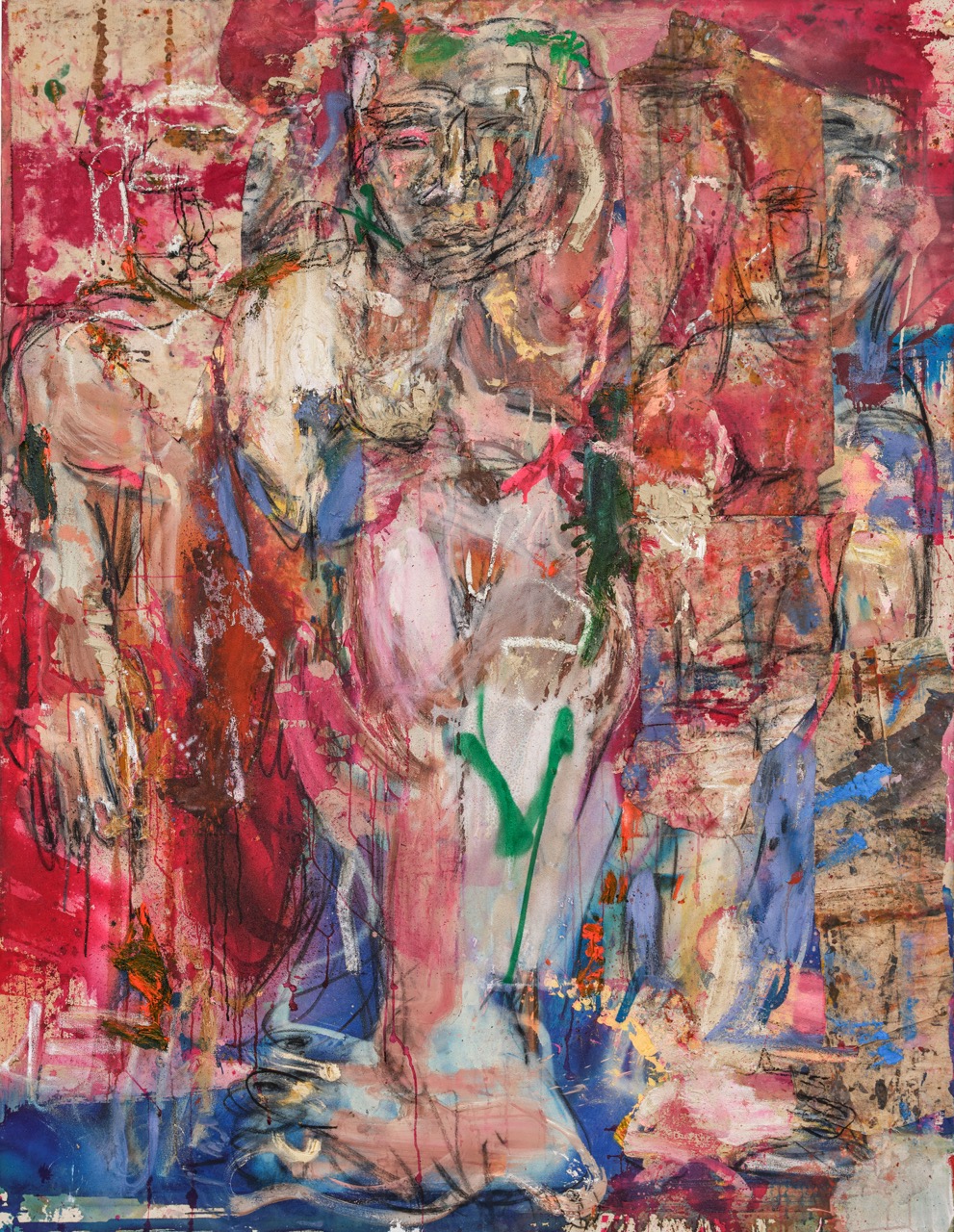
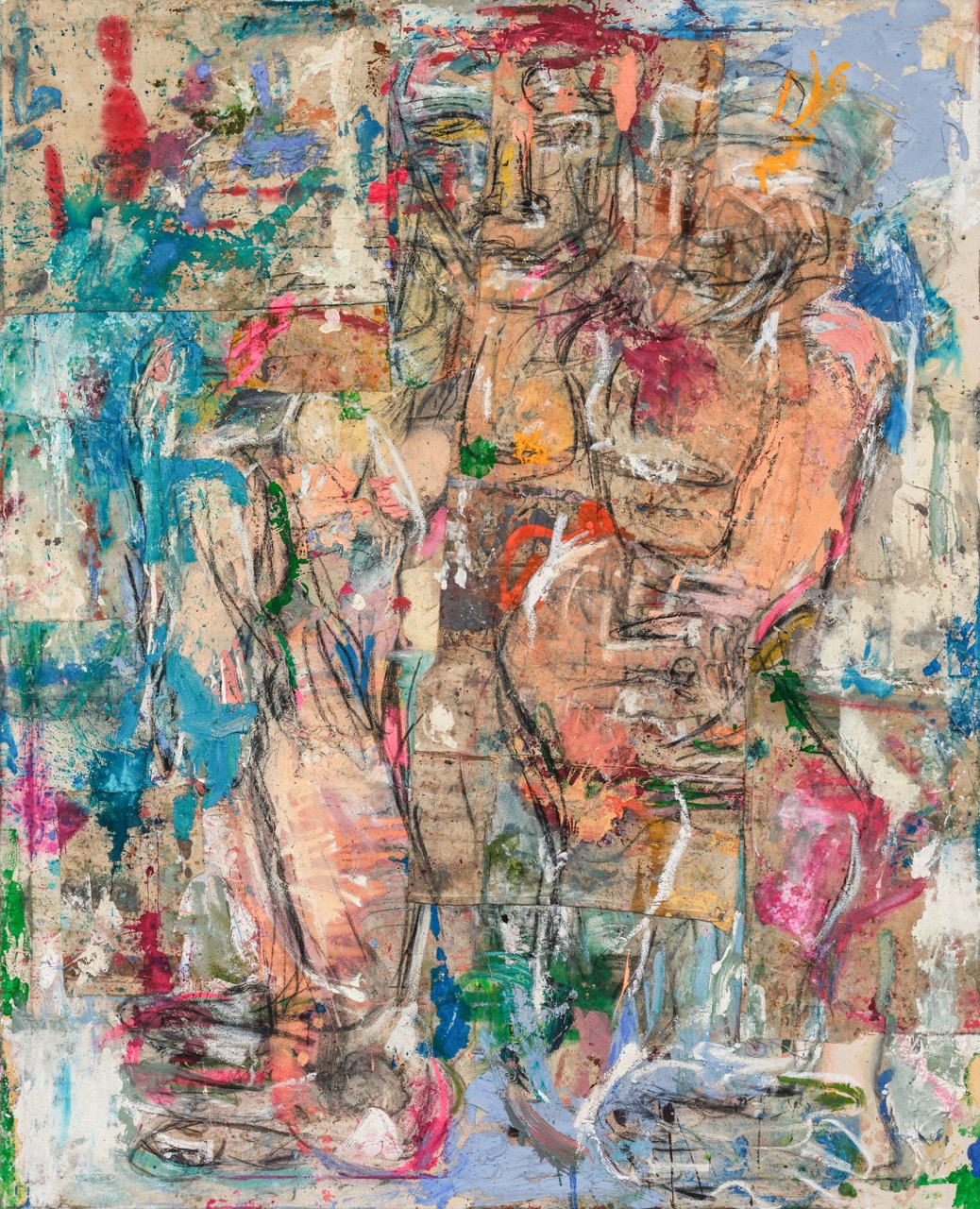
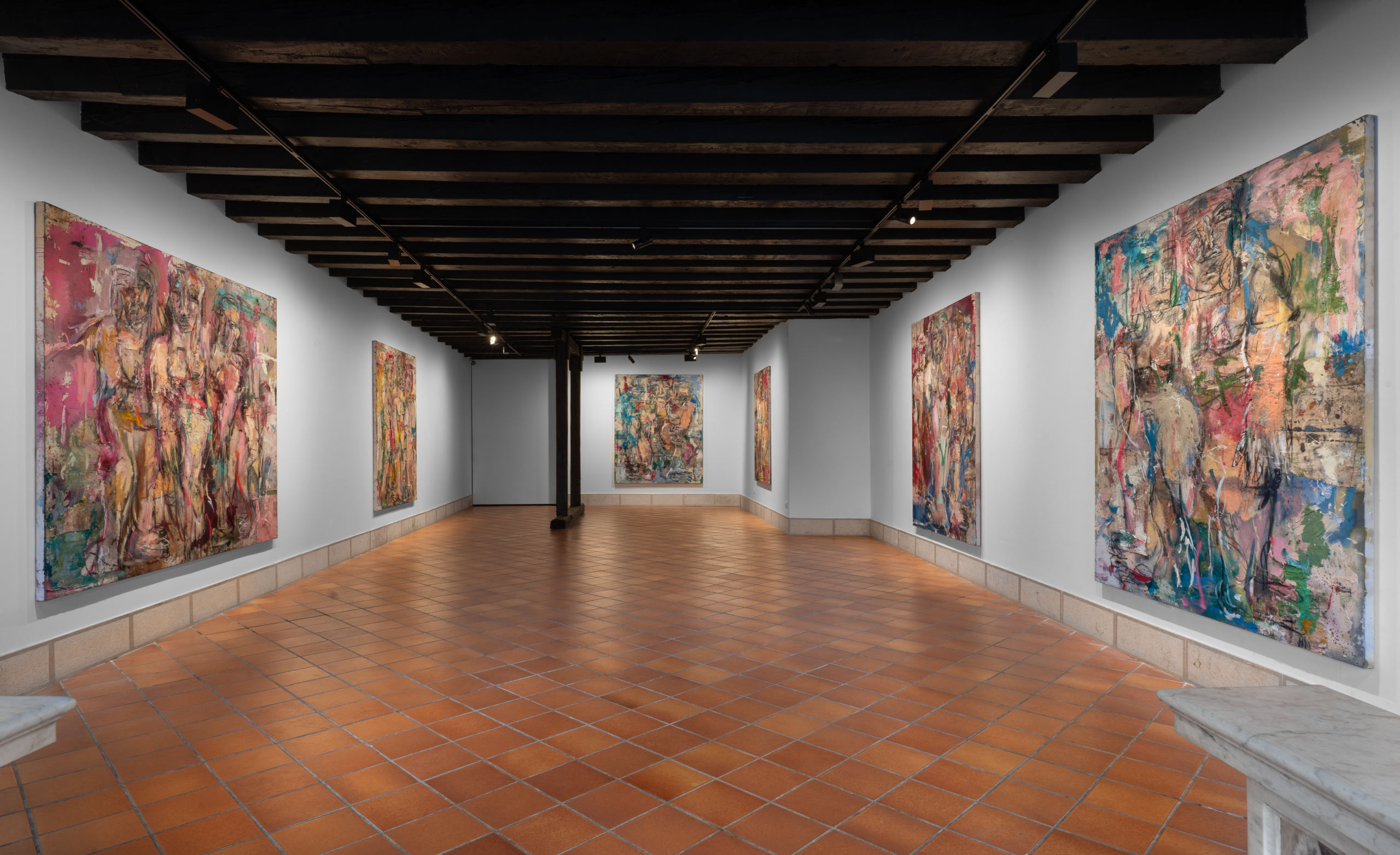
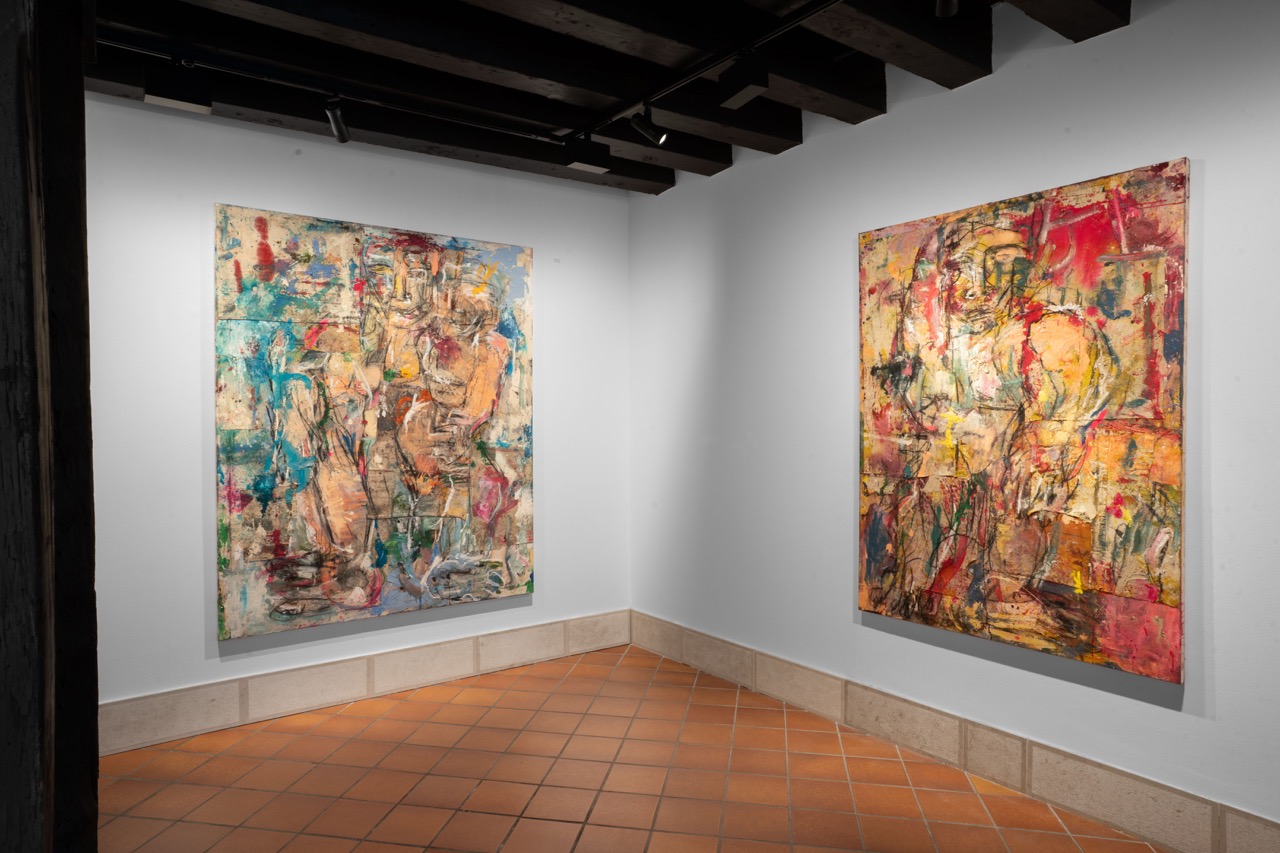
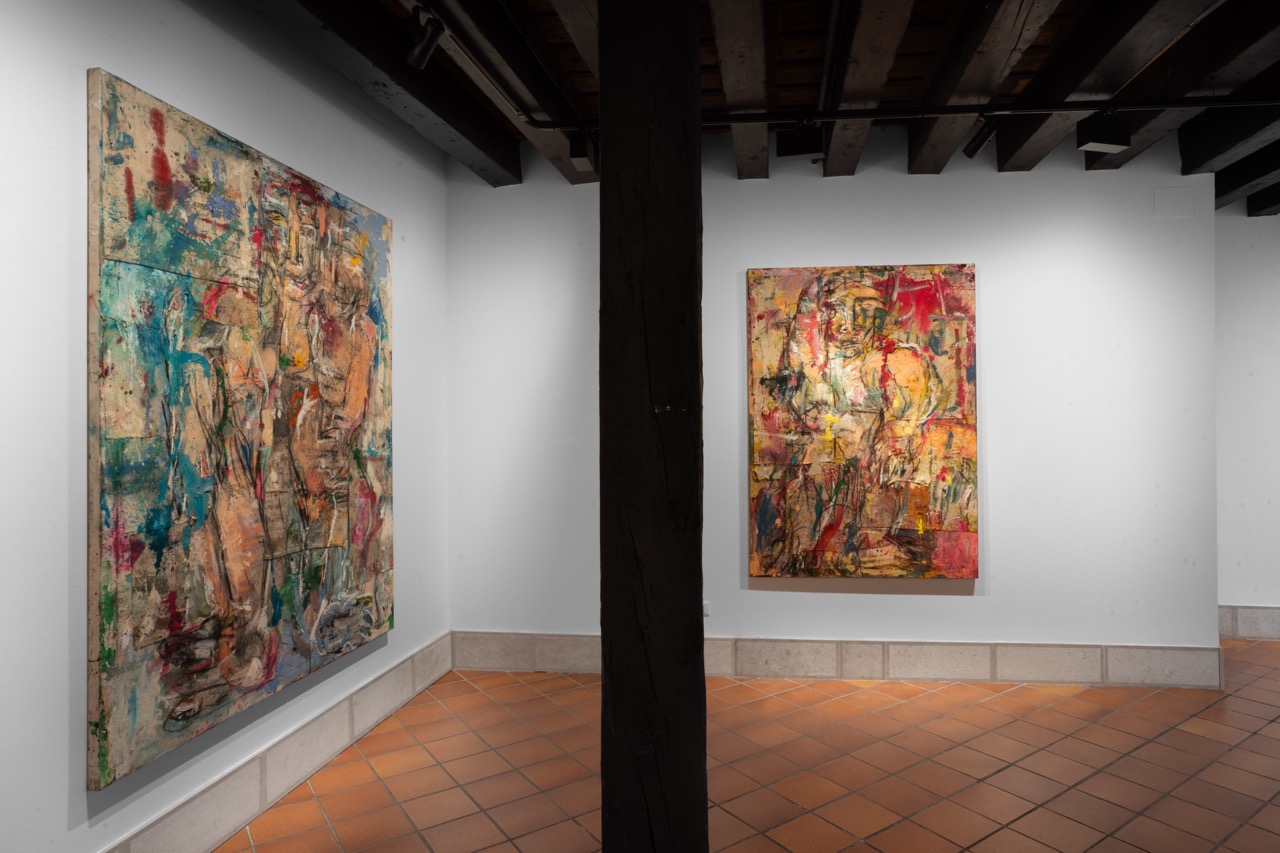
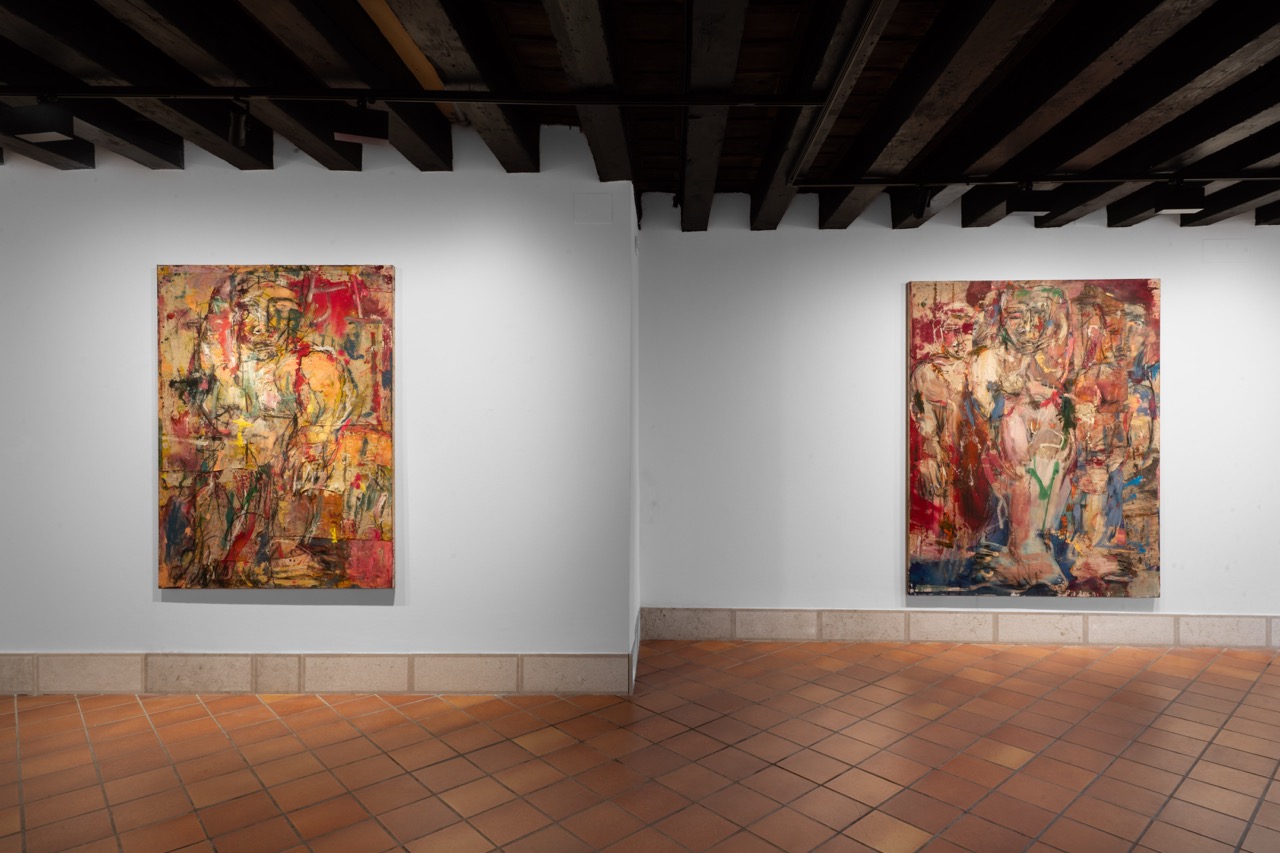
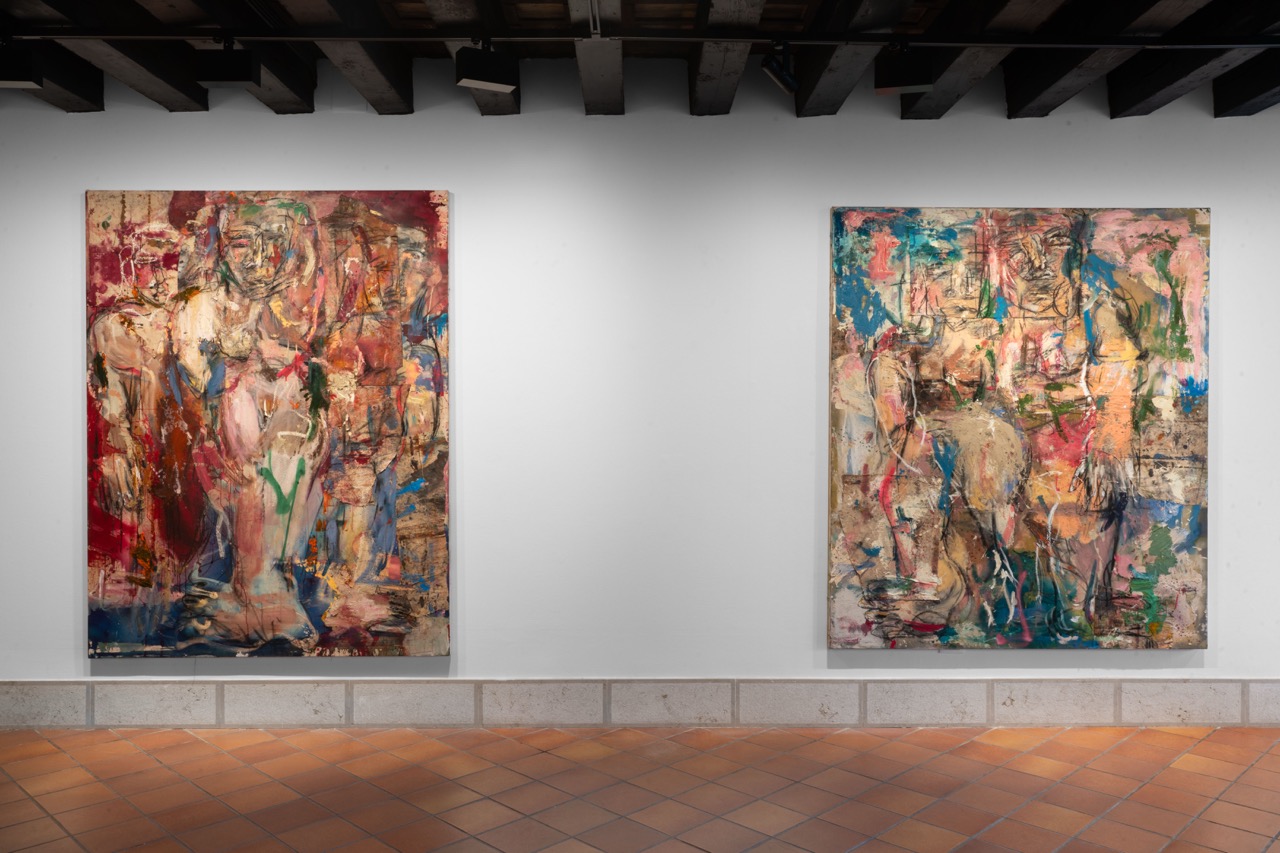
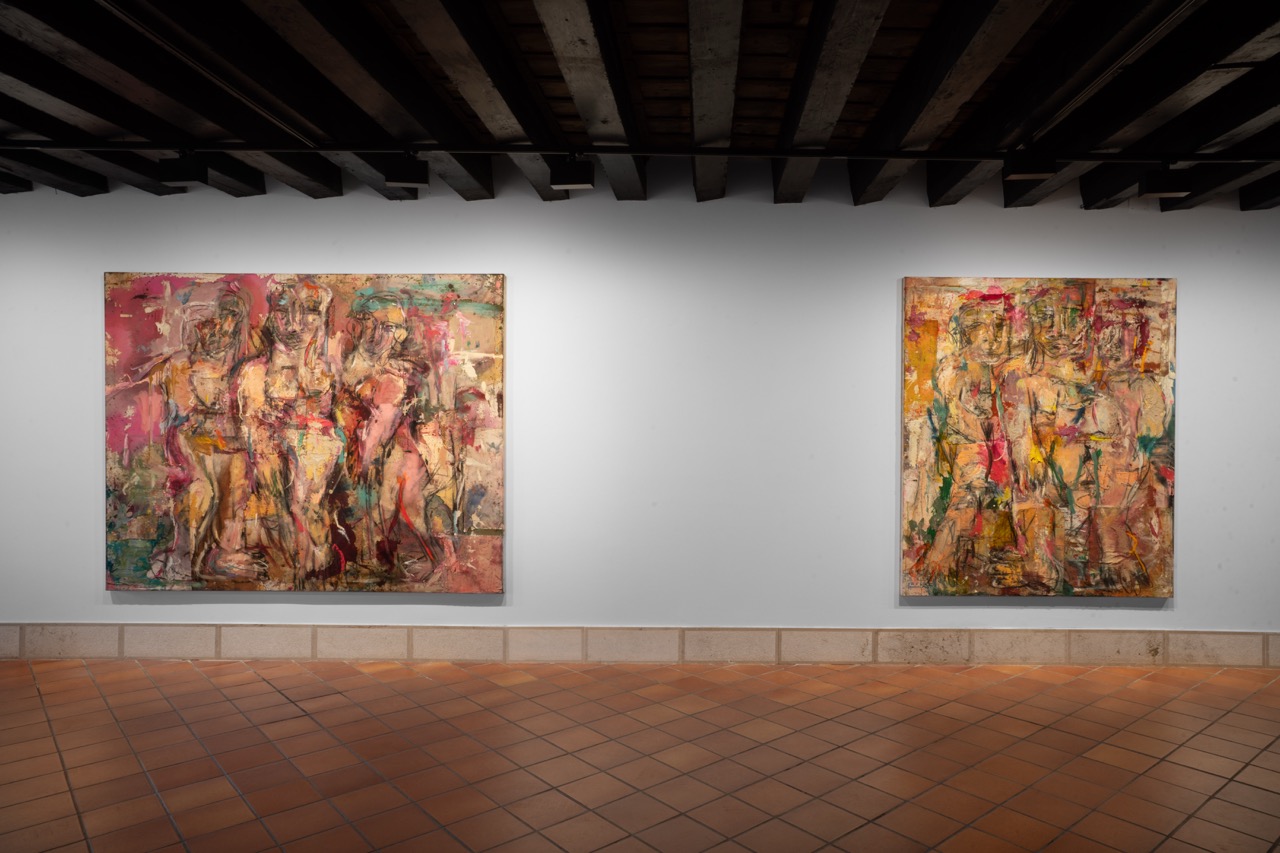
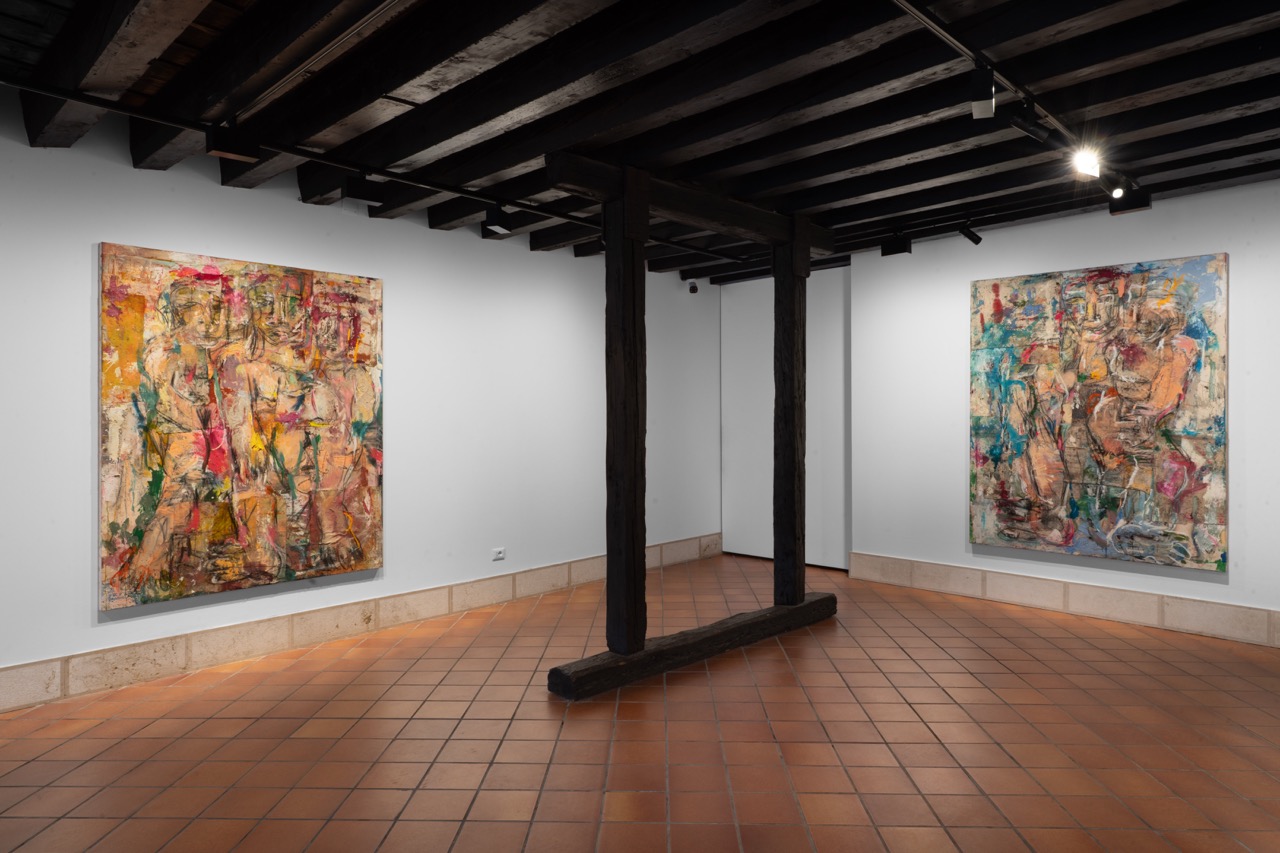
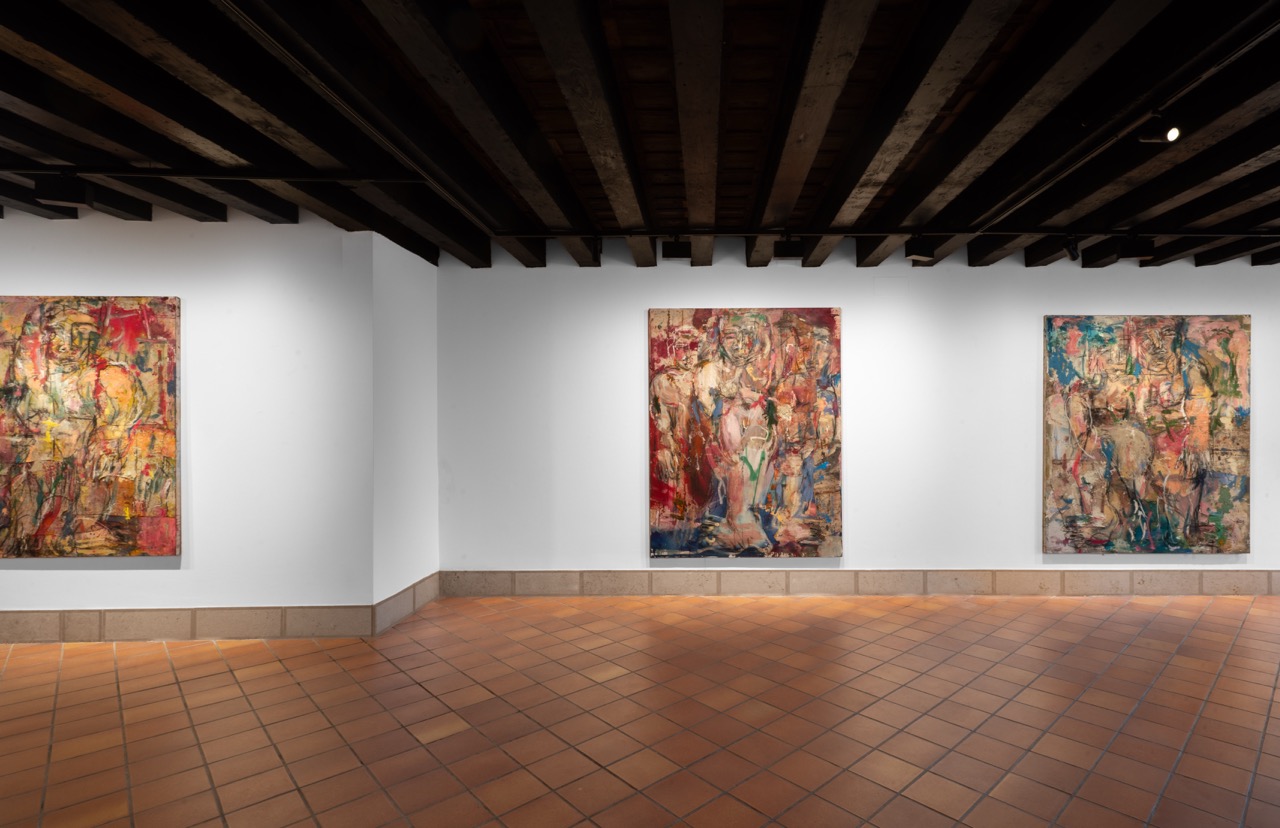
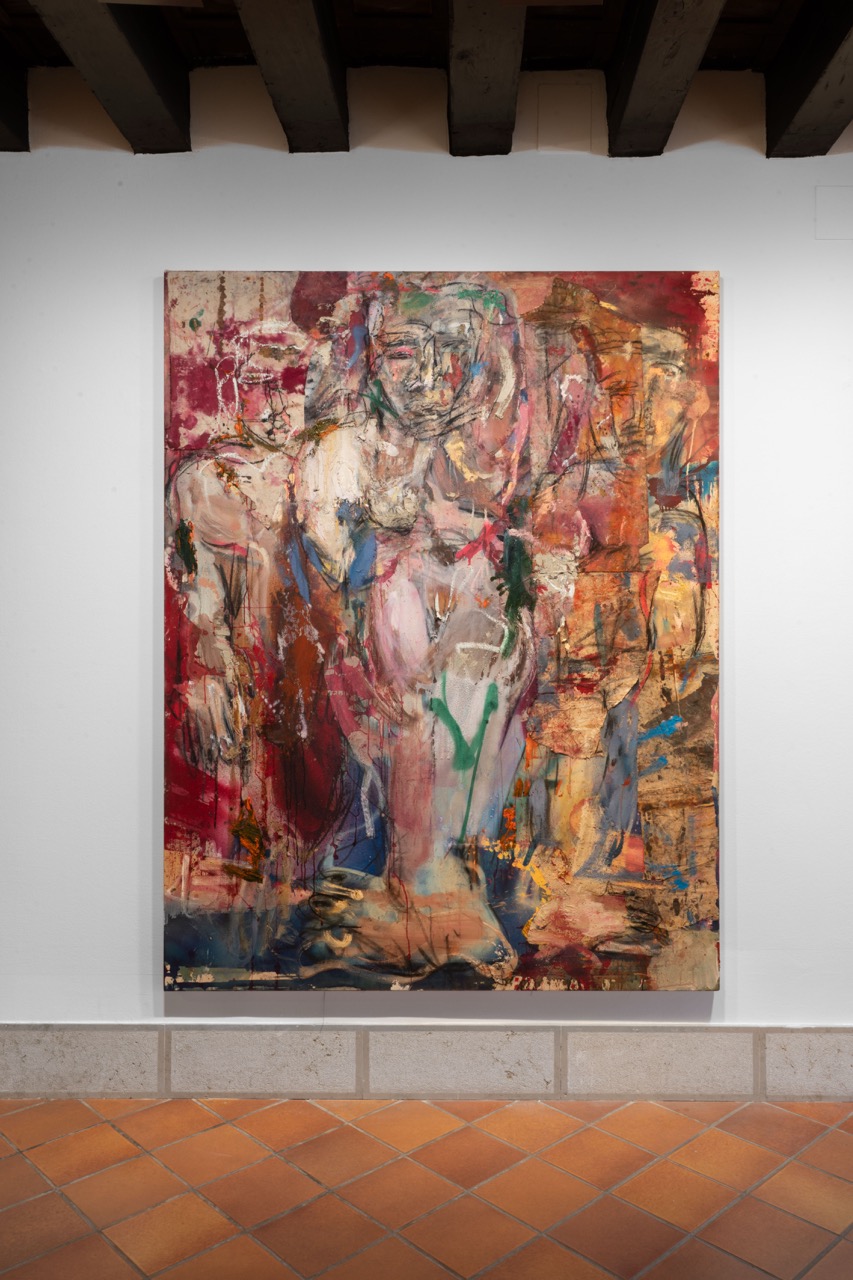
One of the most distinctive aspects of Daniel’s work is its complex relationship with art history. The paintings feel deeply familiar, rooted in a tradition that viewers will intuitively recognise, yet they remain entirely fresh, timeless, and surprising. He readily looks to expressive painters like
Willem de Kooning and Cecily Brown for inspiration, but he also engages structurally with Cubism. He specifically cites Georges Braque Girl with a Mandolin as a compositional touchstone for this new series. However, his intention is never to replicate a purely Cubist aesthetic, as his own painterly language is vastly more visceral and textured. Instead, he borrows the underlying mechanic of showing a figure as if it is rotating on the canvas, capturing the illusion of movement and allowing the subject to be viewed from multiple directions at once. He also adopts the focal techniques found in such historical works, frequently rendering the face as the most detailed element of the painting. This clarity actively draws the viewer in, anchoring the gaze just before the surrounding anatomy dissolves into energetic, abstract marks.
This rich dialogue with the past extends directly into the poses of his subjects. Daniel looks to painted figures and classical sculptures, embedding the familiar, sweeping postures of Michelangelo’s David or the Three Graces within the raw texture of his canvases. As the artist himself describes it, he enjoys “riffing off” these iconic moments, playing against the foundations of art history. It is exactly this approach that adds a comforting layer of recognition to the viewing experience.
Yet, crucially, he is consciously disrupting traditional art historical gazes. Throughout centuries of painting, the female form has often been rendered passive, offered up for the consumption of the artist and the audience. Daniel rejects this dynamic entirely. He ensures his figures maintain complete agency and are unapologetically dominant within their space rather than being exploited by the eye of the beholder. By granting his subjects this undeniable power, cultivated through a deliberate air of mystery and abstraction, he ensures their narratives are never neatly spelled out or laid bare. They demand to be looked at on their own terms, existing powerfully in the space between the paint and the viewer’s own mind.
Gemma Rolls-Bentley